
Introduction
Japandi interior design has moved beyond trend status and is now a considered approach to modern living. By combining Japanese restraint with Scandinavian comfort, this style creates homes that feel intentional, calm, and highly functional. For homeowners and buyers in India, where urban spaces are becoming more compact and lifestyles more fast-paced, the Japandi style offers a disciplined yet warm solution.
This guide approaches Japandi interiors from a practical design perspective. It focuses on how to make decisions that improve spatial quality, usability, and long-term comfort rather than just visual appeal.
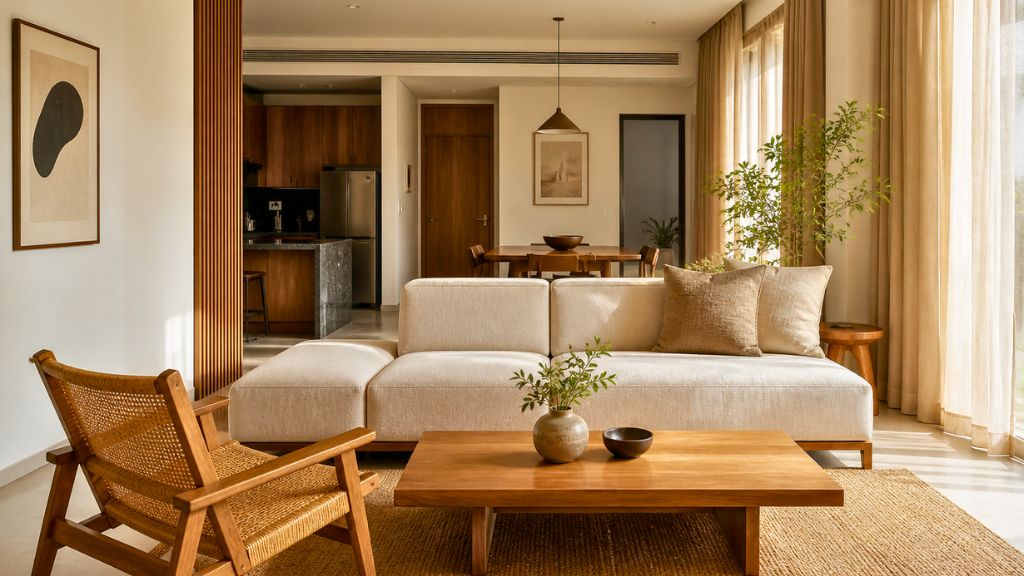
Table of Contents
What is the Japandi Interior Design Style
At its core, the Japandi interior design style is a synthesis of two philosophies. Japanese design contributes simplicity, craftsmanship, and respect for natural imperfection. Scandinavian design introduces comfort, light, and everyday usability. The result is a balanced environment where minimalism does not feel cold, and warmth does not feel cluttered.
Unlike purely aesthetic trends, the Japandi design style is rooted in spatial discipline. It encourages fewer objects, but better ones. It values proportion, light, and material honesty. This is why Japandi homes tend to age well and remain visually relevant over time.
The Design Logic Behind Japandi Interiors
A well-executed Japandi interior design is not achieved through decoration alone. It is the outcome of controlled decisions across layout, materials, and visual weight.
Spatial Clarity and Function
Every element in a Japandi space must justify its presence. Circulation paths remain open, furniture is scaled appropriately, and visual noise is reduced. This improves both movement and mental clarity.
Material Authenticity
Natural materials are not just a stylistic choice but a structural one. Wood, linen, cotton, and stone introduce tactile depth. Instead of layering colors, Japandi interiors rely on layering textures.
Controlled Color Application
The Japandi interior color palette avoids extremes. Warm neutrals form the base, while darker tones are used sparingly to anchor the space. This creates contrast without disrupting calmness.
Light as a Design Element
Natural light is treated as a primary feature. Window treatments are minimal, and reflective surfaces are used carefully to enhance brightness without glare.
Japandi Color Palette for Modern Indian Homes
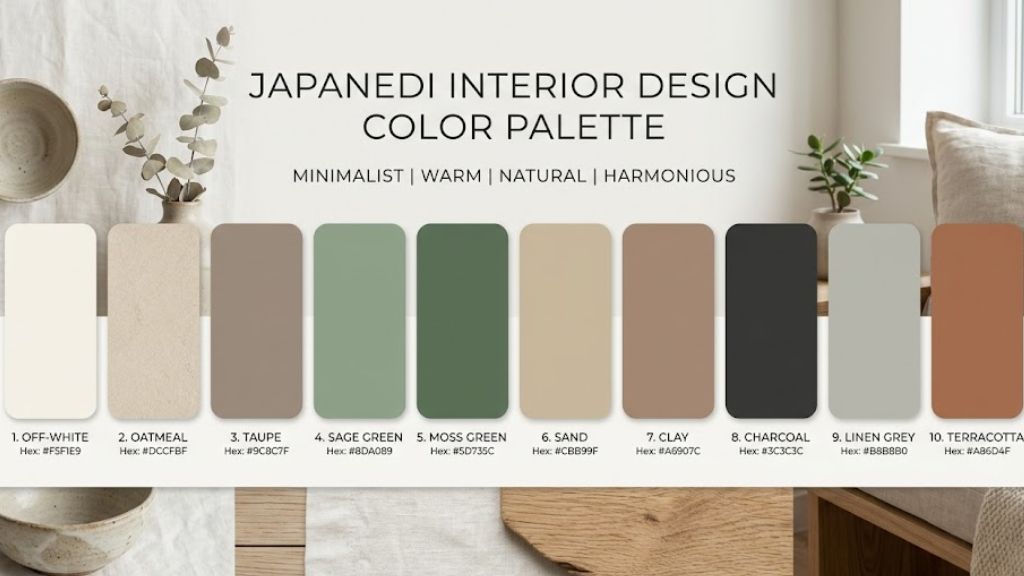
In Indian contexts, lighting conditions are stronger and warmer compared to Nordic regions. This makes color selection even more critical.
A successful Japandi interior design in India typically uses slightly warmer neutrals to balance sunlight. Off-whites, sand tones, muted browns, and soft greys perform better than stark whites. Dark accents such as charcoal or deep wood finishes can be introduced through furniture or lighting fixtures to provide grounding.
Instead of adding multiple colors, variation should come from finishes. Matte walls, textured fabrics, and natural grains create visual richness without overwhelming the eye.
Japandi Furniture Style for Functional Living
Furniture selection defines whether a space truly aligns with the Japandi furniture style. The emphasis is on proportion, usability, and craftsmanship rather than ornamentation.
Low-height furniture is a defining characteristic. It visually expands the room and maintains a grounded feel. Sofas and beds are typically simple in form, with clean edges and minimal detailing. Storage is integrated and often concealed to maintain visual order.
In smaller Indian apartments, multi-functional pieces become essential. A bench with storage, a foldable dining setup, or modular seating can support the principles of Japandi style without compromising practicality.
Applying Japandi Interior Design Across Rooms
Each room in a home serves a different function, but the underlying Japandi interior design principles remain consistent.
The living room should feel open and anchored. A neutral seating arrangement paired with a wooden table and limited decor establishes balance. Decorative elements should be intentional. A ceramic piece, a textured rug, or a single artwork is often sufficient.
In the bedroom, the goal is restfulness. Low beds, soft textiles, and controlled lighting create a quiet atmosphere. Storage should be discreet to avoid visual clutter.
Kitchens in Japandi interiors prioritize efficiency. Clean cabinetry, concealed storage, and uncluttered countertops support both function and aesthetics. Matte finishes tend to work better than glossy ones.
Bathrooms can adopt a spa-like quality. Stone textures, wooden accents, and simple fittings help create a calming environment without excessive design intervention.
Read More: General Low-Budget Interior Design: Affordable Ideas for Stylish Indian Homes
Japandi Interior Design for Small Apartments
The principles of Japandi interior design are particularly effective in compact homes, which are common in cities like Mumbai, Pune, and Nashik.
- Prioritize open layouts where possible to reduce visual fragmentation
- Use furniture with exposed legs to create a sense of lightness
- Limit decorative items to maintain clarity
- Maximize natural light by avoiding heavy curtains
When space is limited, restraint becomes a design advantage rather than a limitation. Japandi’s disciplined approach helps small apartments feel more spacious and organized.
Read More: Sustainable Materials That Redefine Modern Interiors
Adapting Japandi Interior Design in India
While the philosophy remains consistent, Japandi interior design in India requires contextual adaptation.
Local materials can replace imported ones without compromising the aesthetic. Indian woods, handcrafted ceramics, and natural fabrics align well with Japandi principles. Climate responsiveness is also important. Breathable fabrics and well-ventilated layouts improve comfort.
There is also room for subtle cultural integration. A handcrafted artifact or a traditional textile can be included, provided it does not disrupt the overall minimal composition. The goal is harmony, not contrast.
Common Mistakes That Disrupt Japandi Style
Even well-intentioned designs can lose direction if certain fundamentals are ignored.
- Over-decorating with multiple accessories reduces clarity
- Using bright or saturated colors breaks tonal balance
- Selecting bulky furniture affects spatial proportion
- Ignoring texture results in a flat and lifeless space
A refined Japandi home decor approach requires discipline. It is often more about what is removed than what is added.
Planning a Japandi Home with the Right Property
Interior design decisions are closely tied to the property itself. Layout, natural light, ventilation, and room proportions all influence how effectively Japandi interior design can be implemented.
When evaluating a home, consider factors such as window placement, ceiling height, and spatial flow. Open layouts and good natural light significantly enhance the outcome of Japandi interiors.
Platforms like Openplot, a property listing platform, simplify this process by allowing buyers to compare layouts, assess spatial configurations, and identify homes that align with minimalist and functional living. Choosing the right property at the outset reduces the need for excessive modifications later.
Conclusion
Japandi interior design is not about following a trend. It is about creating a living environment that supports clarity, comfort, and long-term usability. Its strength lies in restraint, thoughtful material use, and respect for space.
For homeowners and buyers in India, this approach offers a practical path to better living. It adapts well to compact apartments, aligns with climate needs, and supports a more intentional lifestyle.
The most successful Japandi homes are not the most decorated ones. They are the ones where every element feels necessary, balanced, and quietly refined.