
For many Indian families, owning a permanent home remains one of the most important financial and personal milestones. The Pradhan Mantri Awas Yojana (PMAY) was introduced to support eligible households in achieving this goal through various housing assistance and subsidy benefits.
If you are planning to apply for PMAY in 2026, understanding the application process beforehand can help you avoid mistakes, prepare the required documents, and complete your application smoothly. Whether you choose the online route or prefer visiting a Common Service Centre (CSC) or bank branch, the overall process remains straightforward when approached step by step.
This article explains how to apply for PMAY, the documents generally required, and important points applicants should know before submitting their application.
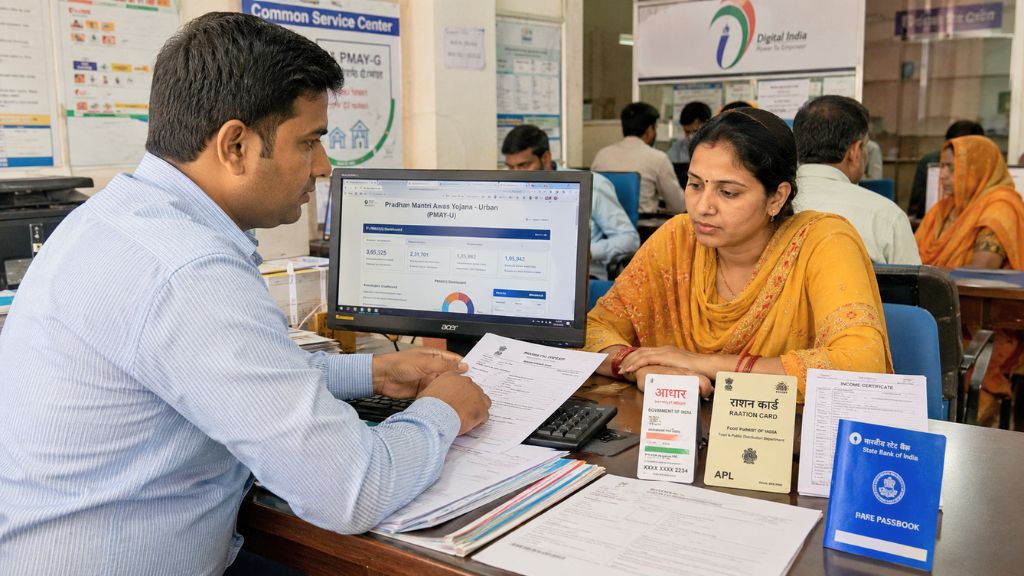
Table of Contents
Understanding PMAY Before Applying
Pradhan Mantri Awas Yojana is a government housing initiative designed to support eligible families who do not own a permanent residential house. Depending on the location of the applicant and the applicable scheme category, beneficiaries may receive housing assistance, financial support, or home loan-related benefits.
Broadly, applicants may fall under:
- PMAY-Urban (PMAY-U) for eligible households in urban areas
- PMAY-Gramin (PMAY-G) for eligible households in rural areas
The applicable category depends on government guidelines, local administrative jurisdiction, and the applicant’s eligibility at the time of application.
Before starting the application process, it is important to verify that you meet the current eligibility requirements specified by the authorities.
Check Your Eligibility Before Filling the PMAY Form
Eligibility verification is the first and most important step in the PMAY application process.
Typically, applicants are required to provide details such as:
- State and location of residence
- Family income information
- The category under which they are applying
- Existing home ownership details
- Previous benefits received under housing schemes, if any
In most cases, applicants who already own a permanent residential house or have previously received housing assistance under certain government housing schemes may not qualify. However, eligibility conditions can change over time, so applicants should always verify the latest guidelines through official government channels before applying.
Why Eligibility Verification Matters
Many PMAY applications are delayed or rejected because of incorrect declarations, incomplete information, or a misunderstanding of eligibility conditions.
Checking eligibility in advance helps applicants:
- Avoid unnecessary application rejections
- Prepare accurate supporting documents
- Understand the category under which they can apply
- Save time during the verification and approval stages
How to Apply for PMAY Online
The online application facility allows eligible applicants to submit their details digitally without visiting multiple offices.
Aadhaar Verification and Registration
The online process generally begins with identity verification.
Applicants are usually required to:
- Enter their Aadhaar number
- Provide their name exactly as it appears on Aadhaar records
- Complete OTP-based authentication
- Grant consent for identity verification
Accurate Aadhaar details are important because mismatched information may create delays during verification.
Filling the PMAY Application Form
Once identity verification is completed, applicants can proceed with the main application form.
The form generally requires information related to:
- Personal details
- Residential address
- Family information
- Income details
- Housing ownership status
- Bank account information
- Property-related information, where applicable
Applicants should carefully review all entries before submission to ensure consistency across supporting documents.
Application Submission and Reference Number
After completing the form and uploading the required documents, applicants can submit their application online.
Upon successful submission, an application reference number or assessment ID is typically generated.
Applicants should save, download, or print this information because it is often required for:
- Tracking application status
- Future correspondence
- Verification procedures
- Document updates, if requested
Read More: PMAY vs State Housing Schemes: Which One is Better?
Applying Through Common Service Centres and Banks
While online applications are convenient, many applicants still prefer offline assistance.
Applying Through a Common Service Centre (CSC)
Common Service Centres help citizens access various government services, including housing-related applications.
At a CSC, applicants generally receive assistance with:
- Form filling
- Document scanning
- Application submission
- Acknowledgment generation
Applicants should carry original documents along with self-attested copies when visiting a centre.
Applying Through an Empanelled Bank
Applicants seeking housing finance may also explore PMAY-related assistance through participating banks and financial institutions.
Bank representatives may guide applicants regarding:
- Home loan eligibility
- Documentation requirements
- Housing subsidy-related procedures
- Application submission processes where applicable
Since banking procedures may differ across institutions, applicants should confirm current requirements directly with the concerned branch.
Documents Commonly Required for PMAY Applications
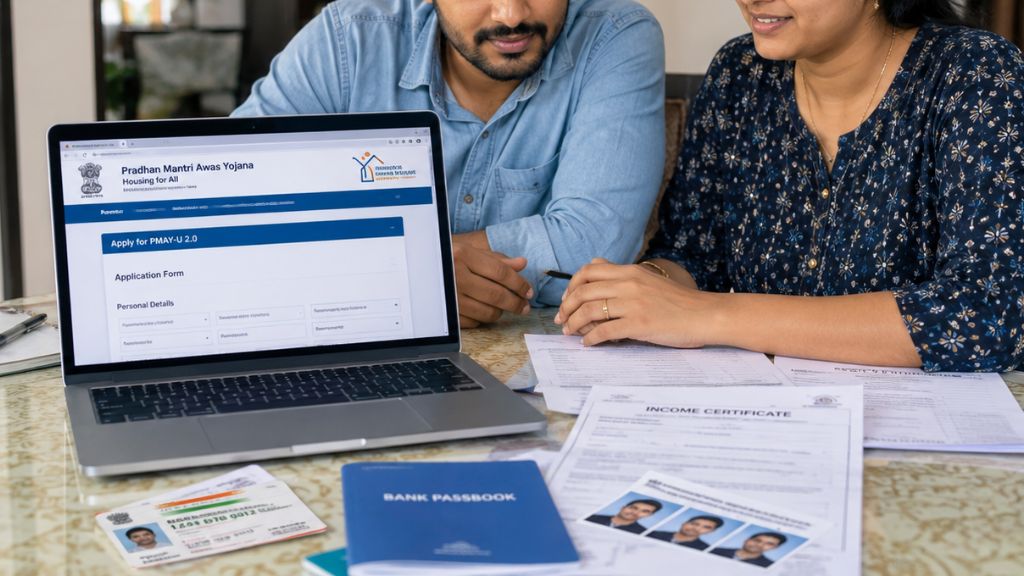
Document requirements may vary depending on applicant category, location, and prevailing government guidelines. However, applicants are commonly asked to provide identity, income, and financial records.
Identity and Address Proof
Commonly requested documents include:
- Aadhaar Card
- Ration Card
- Government-issued identity documents
- Address proof documents
Income and Financial Documents
Applicants may need to provide:
- Income certificate
- Salary proof or income-related records
- Bank passbook or bank account details
Additional Supporting Documents
Depending on the application category, authorities may request:
- Passport-size photograph
- Signature specimen
- Family identification documents
- Property-related records
- Other supporting declarations
Applicants should keep scanned copies ready when applying online.
Important Things to Remember Before Submitting the PMAY Form
Many application issues can be avoided through careful preparation.
Ensure Information Matches Official Records
Details entered in the application should match information available in:
- Aadhaar records
- Bank records
- Income documents
- Family identification documents
Any mismatch may trigger additional verification.
Keep Copies of Submitted Documents
Applicants should maintain both digital and physical copies of:
- Application form
- Acknowledgment receipt
- Assessment ID or reference number
- Uploaded documents
These records can be useful during future verification stages.
Verify the Latest Scheme Guidelines
Housing schemes evolve over time based on government notifications and policy updates.
Before applying, applicants should always verify:
- Current eligibility criteria
- Applicable categories
- Documentation requirements
- Submission timelines
- Benefit structures
Relying solely on older information may result in errors during application.
Conclusion:
Applying for PMAY in 2026 is primarily about understanding your eligibility, preparing the correct documents, and following the official application process carefully. Whether you apply online through the designated portal or seek assistance through a Common Service Centre or participating bank, accurate information and proper documentation remain the foundation of a successful application.
For homebuyers exploring residential opportunities, housing schemes can be one part of the overall homeownership journey. Alongside government assistance programs, it is equally important to evaluate property location, legal approvals, infrastructure, connectivity, and long-term suitability before making any property-related decision.
Read More: Government Subsidies for First-Time Home Buyers in 2026
More from Openplot Blog
Keep up with the latest news, market trends, and valuable insights from the Indian real estate sector through the Openplot Blog.
Openplot is a leading property listing platform that connects property buyers, sellers, investors, and real estate professionals across India. Through our blog and knowledge resources, we share informative articles, property market updates, buying and selling guides, investment tips, and legal information to help you make confident real estate decisions.
Whether you are searching for your dream property, planning to sell, exploring investment opportunities, or staying informed about market developments, Openplot provides useful resources to support your property journey.
Contact Openplot
📞 +91 9914146969, +91 9281064844
📍 Hyderabad, Telangana, India
Disclaimer: The content available on the Openplot Blog is provided solely for informational purposes. The information shared may be based on publicly available sources, industry trends, and general market observations, and it should not be considered legal, financial, investment, or professional advice. Readers should conduct their own research and consult qualified professionals before making any property, financial, legal, or investment-related decisions. Openplot is not responsible for any actions taken or losses incurred based on the information presented on this platform.
Frequently Asked Questions
How can I check the status of my PMAY application after submission?
Applicants can track their PMAY application status using their assessment ID, application reference number, or registered details through the official PMAY tracking system whenever status-checking services are available.
Can a family apply for PMAY if one member owns ancestral property?
Eligibility depends on the ownership status of a pucca house and other conditions specified by the government. Applicants should verify current guidelines regarding inherited or ancestral properties before applying.
Is Aadhaar mandatory for PMAY application in 2026?
Aadhaar is generally required for identity verification and beneficiary authentication during the PMAY application process. Applicants should ensure their Aadhaar details are updated and accurate before applying.
Can self-employed individuals apply for PMAY benefits?
Yes, self-employed professionals, small business owners, and other eligible income earners may apply under applicable PMAY categories, subject to meeting the scheme’s income and eligibility criteria.
What should I do if my PMAY application is rejected?
Applicants should review the reason for rejection, correct any discrepancies if permitted, and follow the instructions provided by the concerned authority for reapplication or grievance resolution.
Can I update my details after submitting the PMAY application form?
In certain situations, applicants may be allowed to update specific details during verification or correction windows. The availability of modification options depends on the prevailing application process.
Does PMAY cover the purchase of ready-to-move homes?
The applicability of PMAY benefits depends on the scheme component, property type, and eligibility conditions in force at the time of application. Applicants should verify whether the selected property qualifies under current guidelines.
Are co-applicants allowed in a PMAY housing application?
Yes, eligible family members may be included in the application where permitted. Co-applicant requirements can vary based on the applicable PMAY category and housing finance conditions.
How long does it typically take to verify a PMAY application?
Verification timelines can differ based on document completeness, local authority procedures, beneficiary validation, and the volume of applications being processed.
What property documents should homebuyers verify before using PMAY benefits?
Homebuyers should verify key property documents such as title records, approved building plans, land-use permissions, project approvals, and other legal clearances before proceeding with any property purchase decision.