
Property verification in Tirupati has become increasingly important as residential layouts, plotted developments, and infrastructure projects continue expanding across the district. Buyers, landowners, developers, and investors often rely on survey records to confirm land boundaries, survey numbers, and subdivision details before making property decisions.
One of the commonly searched land-record documents in Andhra Pradesh is the Tirupati Naksha Survey Map. This map is generally linked with cadastral records, FMB sketches, village survey maps, and Andhra Pradesh land-record systems maintained through revenue and survey departments.
For people researching plots through platforms like Openplot, understanding how survey maps work can help improve property verification and reduce documentation-related risks.
Since land-record systems are updated periodically, information available on public portals may change over time. Users should always verify the latest details from official government records and qualified professionals before proceeding with any property transaction.
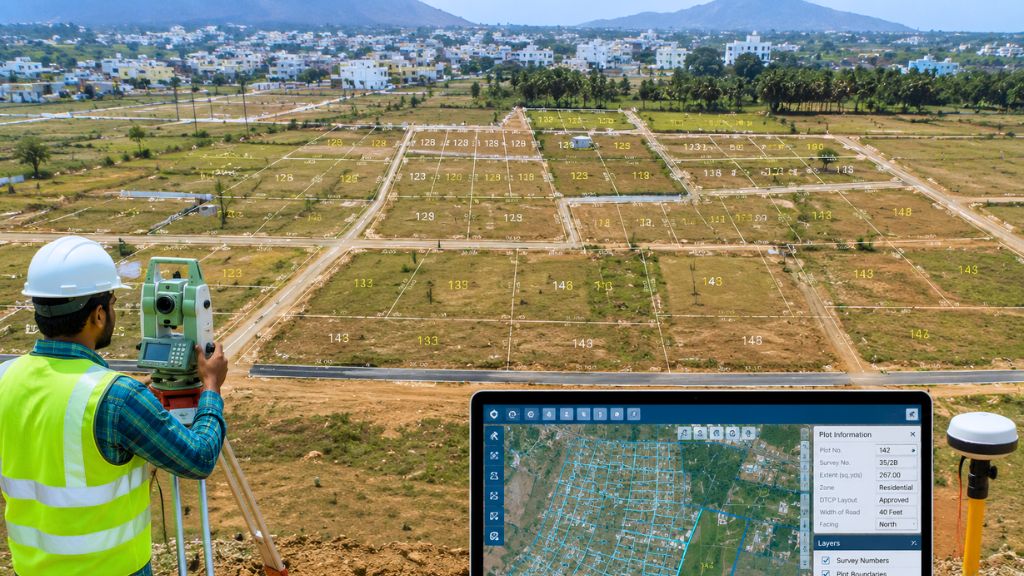
Table of Contents
Understanding Tirupati Naksha Survey Maps
A Tirupati Naksha Survey Map usually refers to a cadastral or FMB-based land survey map that visually represents survey boundaries and plot divisions within a village or layout.
These maps are commonly used for:
- Land boundary identification
- Survey number verification
- Plot subdivision checks
- Layout analysis
- Property due diligence
- Encroachment review
In Andhra Pradesh, cadastral maps are often connected with:
- FMB maps
- Bhu Naksha records
- Village maps
- LP maps
- Record of Rights documents
- Adangal and 1-B records
Unlike basic location maps, cadastral survey maps contain measurement-oriented details that help identify how land parcels are officially recorded within the revenue system.
Why Survey Maps Matter in Tirupati Real Estate
The Tirupati region has seen continued residential and infrastructure growth over recent years. As layouts expand into surrounding villages and peri-urban areas, survey-based verification becomes more important for identifying genuine land records.
A survey map may help users understand:
- Exact survey boundaries
- Subdivision patterns
- Internal access roads
- Adjoining survey numbers
- Plot dimensions
- Layout alignment
This information is often useful during property evaluation and legal verification processes.
Read More: Bhu Naksha: Bridging Technology and Land Measurement in India
How FMB and Cadastral Maps Connect with Andhra Pradesh Land Records
In Andhra Pradesh, cadastral maps generally work alongside revenue records rather than functioning as standalone ownership proof.
Relationship Between FMB Maps and 1-B Records
An FMB or cadastral map is commonly cross-checked with:
- Record of Rights (ROR)
- 1-B documents
- Adangal records
- Pattadar details
- Mutation entries
- Revenue survey records
When the map data and revenue records match correctly, it becomes easier to confirm whether the physical plot corresponds with official survey documentation.
Importance of Survey Subdivisions
A single survey number may later be divided into multiple plots or sub-survey numbers. This is common in residential layout developments around expanding urban areas.
Survey maps help identify:
- Original land extent
- Newly divided plots
- Shared access roads
- Irregular subdivisions
- Boundary overlaps
This becomes especially useful while reviewing plotted developments and agricultural-to-residential conversion areas near Tirupati city.
Accessing Tirupati Bhu Naksha and FMB Survey Maps Online
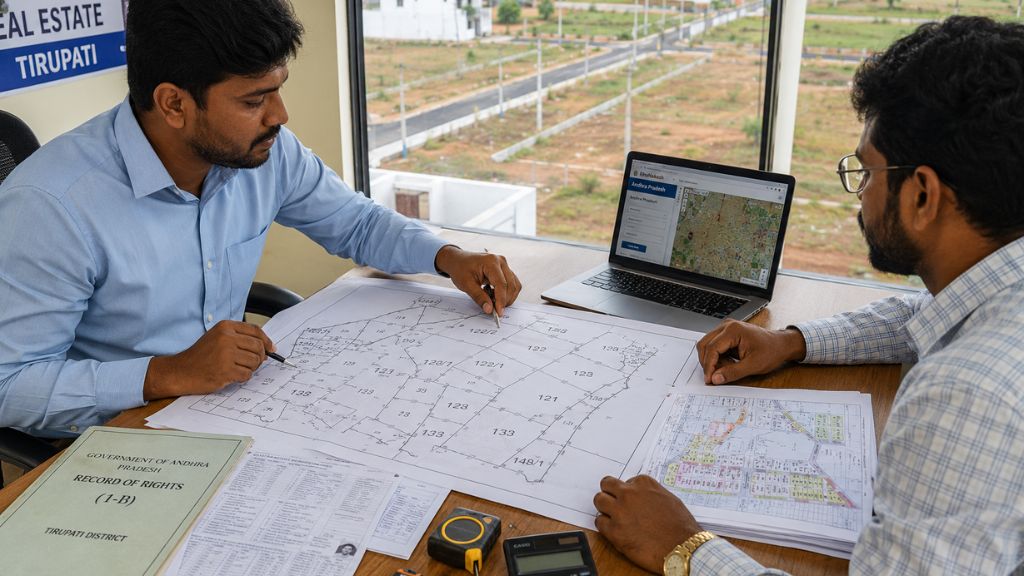
Digitization of land records has improved public access to survey-related information across Andhra Pradesh. Various online systems now allow users to search land details based on district and survey references.
Andhra Pradesh Bhu Naksha and Cadastral Portals
Users generally access survey maps by selecting:
- District
- Mandal
- Village
- Survey number
- Plot or subdivision details
The portal may generate a cadastral map or downloadable FMB-style report for the selected land parcel.
These digital records are commonly used for preliminary land verification before conducting physical inspections or legal review.
Village-Level Survey Map Access
Some integrated land-record systems also provide village-level mapping information, including:
- Survey clusters
- Village boundary layouts
- Land segmentation patterns
- Internal road alignments
- Layout-level mapping references
These maps can assist users in understanding how a particular plot fits within the broader village land structure.
Because government databases may be updated periodically, users should not rely solely on old downloads or screenshots for property verification.
Read More: IGRS AP Market Value: A Buyer and Seller Guide to the New Market Value in Andhra Pradesh
Role of Tirupati Survey Maps in Property Due Diligence
Survey maps are often used during property due diligence because they visually represent the recorded land structure.
Identifying Boundary and Area Mismatches
In some cases, the dimensions promoted in marketing layouts may differ from official cadastral measurements. Comparing project plans with survey maps may help identify:
- Area mismatches
- Encroachments
- Road-width variations
- Irregular plot shapes
- Survey overlaps
This process can help buyers avoid confusion during registration or future development activity.
Verifying Layout Alignment
For plotted developments around Tirupati district, survey maps may assist in checking whether:
- Layout boundaries align with survey records
- Internal roads appear properly segmented
- Subdivisions are reflected in cadastral mapping
- Adjacent land parcels interfere with the proposed layout
Property listing platforms such as Openplot may help users explore available plots and project information, but survey verification should still be completed independently using official records.
Supporting Legal and Technical Reviews
FMB and cadastral maps are commonly reviewed during:
- Title verification
- Property registration analysis
- Bank loan processing
- Land conversion review
- Planning approvals
- Infrastructure feasibility studies
Legal advisors and survey professionals often use these maps as supporting technical references during documentation review.
GIS Mapping and Digital Land Analysis in Tirupati
Digital land-record systems are increasingly being integrated with GIS-based mapping technologies. This allows better visualization and spatial analysis of land parcels across growing urban regions.
Use of GIS in Land Mapping
Digitized cadastral layers may support:
- Land-bank analysis
- Infrastructure planning
- Plot inventory management
- Access-road mapping
- Development-density studies
In developing areas around Tirupati and nearby mandals, GIS-based analysis can help planners and developers understand land-use patterns more effectively.
Relevance for Property Platforms
Platforms like Openplot operate as property listing platforms where users can explore plots, residential land, and real-estate opportunities. Accurate location mapping and survey-linked property information may help improve listing clarity and property research workflows.
However, users should independently verify all legal, survey, and ownership records before proceeding with any transaction.
Important Things to Check Before Relying on a Survey Map
Digital survey maps are useful for reference and preliminary verification, but they should not be treated as final proof of ownership or legal clearance.
Conduct Physical Site Verification
Actual site conditions may differ from digital records because of:
- Informal boundary usage
- Fence shifts
- Unrecorded construction
- Access-road modifications
- Encroachments
Physical measurement by licensed survey professionals remains important for accurate verification.
Verify Updated Revenue Records
Land data may change over time due to:
- Property registrations
- Mutation updates
- Court orders
- Family partitions
- Government acquisition activity
- Survey corrections
Users should confirm whether the latest records match the downloaded map details.
Consult Qualified Professionals
For large land purchases or development projects, it is advisable to consult:
- Licensed surveyors
- Property advocates
- Revenue consultants
- Planning professionals
Professional review can help identify discrepancies that may not be visible in publicly available map records.
Conclusion
A Tirupati Naksha Survey Map plays an important role in understanding survey boundaries, plot divisions, and cadastral land structure within Tirupati district. These maps are commonly used for property verification, layout analysis, and land due diligence across residential and commercial real-estate projects.
As Andhra Pradesh continues digitizing land-record systems, access to FMB maps and cadastral records has become easier for property buyers, developers, and investors. Still, publicly available information may change with time, and users should always cross-check survey maps with updated revenue records, legal documents, and on-ground verification.
For users exploring property opportunities through Openplot, combining cadastral map research with thorough legal due diligence can support more informed property evaluation and decision-making.
Frequently Asked Questions
What is the difference between an FMB map and a village map in Tirupati?
An FMB map usually focuses on individual survey numbers, plot measurements, and boundary details, while a village map shows the broader land structure of the entire village, including roads, agricultural land, and grouped survey areas.
Can a Tirupati Naksha Survey Map confirm property ownership?
A survey map alone does not act as ownership proof. It is generally used along with revenue records such as 1-B, Adangal, sale deeds, and mutation records to verify land details.
Why do survey numbers sometimes differ from layout plot numbers?
Layout plot numbers are created during project planning, while survey numbers originate from government land records. One survey number may contain multiple layout plots after subdivision and development.
Is it possible to identify encroachments using cadastral survey maps?
Survey maps may help identify possible boundary overlaps or irregular land usage patterns. However, accurate encroachment verification usually requires physical land measurement by a licensed surveyor.
How useful are Bhu Naksha maps for plot buyers in Tirupati?
Bhu Naksha maps can help buyers understand plot location, boundary structure, and surrounding survey divisions before purchasing land. They are commonly used for preliminary due diligence.
Do banks check FMB and survey records before approving property loans?
Many banks and financial institutions review land records, survey details, and title documents during property loan processing, especially for plots and large land parcels.
Can survey boundaries change after land subdivision?
Yes. Boundaries and sub-survey divisions may change after partition, registration, government surveys, or approved layout development. Updated records should always be checked before transactions.
Are online Tirupati survey maps always accurate and updated?
Publicly available land-record portals are updated periodically, but records may sometimes lag behind recent registrations or survey corrections. Users should verify the latest data through official sources.
Why is physical land verification important even after checking digital maps?
Digital maps may not reflect on-ground conditions such as fencing changes, access-road shifts, unauthorized occupation, or construction activity. Site inspection helps confirm actual land conditions.