
India’s rental market is currently reflecting a phase of structural adjustment rather than a temporary spike. Across major urban centres such as Bengaluru, Hyderabad, and Delhi NCR, rental values have recorded sustained increases over the past two years, with growth commonly observed in the 20% to 35% range across several micro-markets.
This shift is shaped by a combination of demand recovery, supply-side limitations, and evolving patterns of urban living. For tenants and property seekers, understanding these underlying factors is essential to navigating the rental market with clarity.
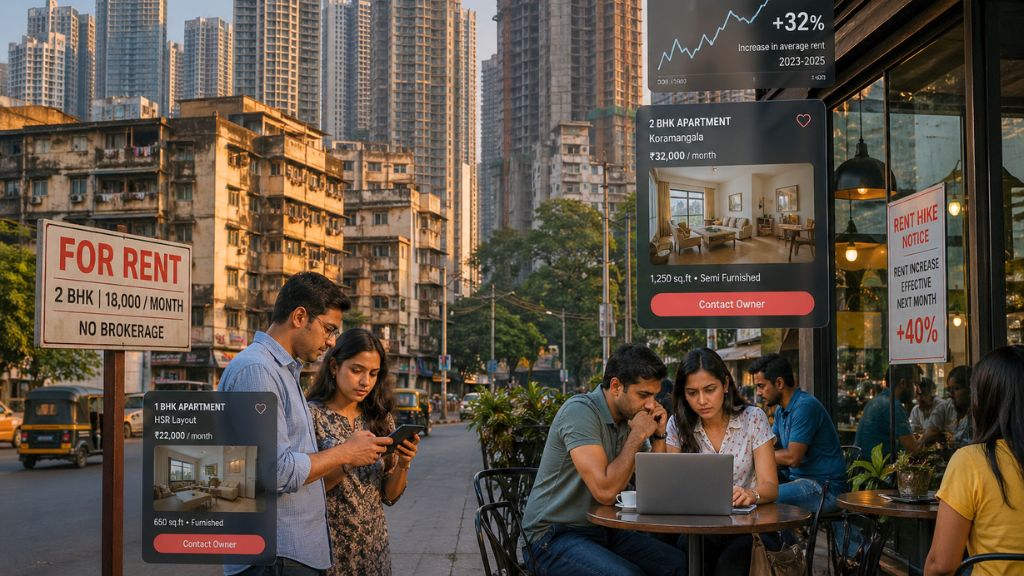
Table of Contents
4 Key Factors Driving the Current Rental Pressure
The rise in rents is not driven by a single trigger, but by multiple interconnected factors that influence both demand and supply conditions.
1. Demand Has Rebounded Faster Than Supply
After the pandemic phase, urban movement has picked up pace again. A large number of professionals have returned to office-based work, particularly in IT parks and service sector hubs located. This has naturally increased pressure on housing near employment zones.
However, the supply side has not adjusted at the same speed. New housing additions, especially in the affordable and mid-income rental category, remain limited. As a result, the gap between demand and availability has widened in many localities.
2. Rent Is Consuming a Larger Share of Income
In several urban households, rent now takes up more than 30% of monthly income. This level is significant because it reduces flexibility in household budgets. When housing costs rise beyond this range, it directly affects savings, long-term planning, and everyday financial stability.
Read More: Property Prices in India’s IT Cities Rise in 2026: What’s Really Driving the Market
3. Sharp and Unpredictable Rent Hikes
Earlier, rental increases were relatively steady and predictable, usually within a 5% to 10% range annually. That pattern has changed in many areas. Tenants are now seeing increases that can go much higher during renewals, sometimes in the 20% to 50% range, depending on demand in the locality.
This variation makes it difficult for tenants to plan long-term stays and often leads to unplanned relocation decisions.
4. Informal Rental Practices Still Dominate
Despite increasing awareness, a large portion of rental agreements in India remain informal or loosely structured. Common issues include:
- Lack of standardized agreements
- High and non-transparent security deposits
- Limited legal recourse in disputes
This reduces tenant security and increases risk exposure.
While awareness is improving, these gaps still influence how secure and predictable the rental experience feels for tenants in many urban areas.
Key Changes in the Rental Market and Their Impact on Renters
While upward pressure on rents is evident, the market is also showing signs of gradual adjustment. Tenant behaviour, location preferences, and discovery methods are evolving in response:
- Shift toward peripheral micro-markets: Renters are increasingly evaluating suburbs and emerging corridors where pricing is relatively moderate
- Growth of shared living formats: Co-living and flat-sharing models are being adopted to distribute rental costs more efficiently
- Migration beyond top metros: Tier-2 and Tier-3 cities are gaining traction due to lower living costs and improving employment ecosystems
- Increased reliance on structured search platforms: Digital platforms such as Openplot are enabling users to compare listings, assess locality trends, and reduce dependency on fragmented offline channels
- Gradual formalization of agreements: Awareness around documented rental contracts is improving, leading to clearer terms and better-defined responsibilities
From a practical standpoint, renters may benefit from evaluating not just headline rent but the overall cost structure, including deposits, maintenance charges, and commute implications. Comparing multiple properties across locations can help identify better value within the same budget range.
Policy Context and Additional Factors Shaping the Market
Beyond immediate demand and supply conditions, several broader factors continue to influence the direction of the rental market.
Model Tenancy Framework
The Model Tenancy Act 2021 provides a structured approach to rental agreements, including defined responsibilities and dispute resolution mechanisms. Its effectiveness depends on state-level implementation, which currently varies, resulting in uneven adoption across regions.
Affordable Housing Initiatives
Programs under Pradhan Mantri Awas Yojana include components aimed at rental housing, particularly for specific segments such as migrant workers. While these initiatives contribute to the broader housing ecosystem, their current scale does not fully address mainstream urban rental demand.
Interest Rate Environment
Higher home loan interest rates in recent periods have influenced housing decisions, with some households postponing property purchases. This has indirectly increased demand for rental housing, adding to existing pressure in urban markets.
Urban Land and Planning Constraints
Limited land availability in core city areas restricts large-scale residential development, particularly in high-demand zones. This structural constraint plays a key role in maintaining supply pressure within central urban locations.
Changing Household Structures
A gradual shift toward smaller households and independent living preferences is increasing the number of rental units required. This trend is contributing to sustained demand, particularly in urban employment centres.
Workforce Mobility and Flexibility
Evolving employment patterns, including shorter job cycles and project-based roles, are reinforcing the preference for renting over ownership. Flexibility in location and tenure is becoming an important consideration for many working professionals.
Conclusion
India’s rental housing market in 2026 reflects a broader structural transition shaped by economic recovery, demographic movement, and supply-side realities. While rising rents and constrained availability present challenges, they also highlight the need for more informed and systematic approaches to renting.
Tenants can benefit from evaluating total housing costs, understanding agreement structures, and comparing multiple options before making decisions. Platforms such as Openplot play a role in enabling this process by offering organized access to property listings and locality insights.
As policy frameworks strengthen and supply gradually aligns with demand, the rental market is expected to evolve toward greater balance. Until then, clarity, preparation, and informed choice remain essential for navigating India’s urban rental environment.
Disclaimer: This article is intended for general informational purposes only. Rental values, policies, and availability may vary based on city, locality, and market conditions. Readers are advised to independently verify property details, rental agreements, and applicable regulations before finalizing any housing decision.