
Buying a home after retirement in India is increasingly becoming a planned financial decision rather than an exception. With structured home loan products for senior citizens, improved retirement housing options, and enhanced financial awareness, many retirees are now able to purchase properties that align with both their lifestyle needs and financial security.
For most home buyers after retirement, the objective is not speculation but stability. The focus shifts toward comfortable living, healthcare access, proximity to family, and long-term financial balance. Platforms like Openplot, a property listing platform, help simplify this journey by offering verified listings of apartments, villas, and plots across multiple Indian cities.
This guide provides a clear and practical understanding of how retirement home buying works in India, what financial decisions matter most, and what risks should be carefully managed.
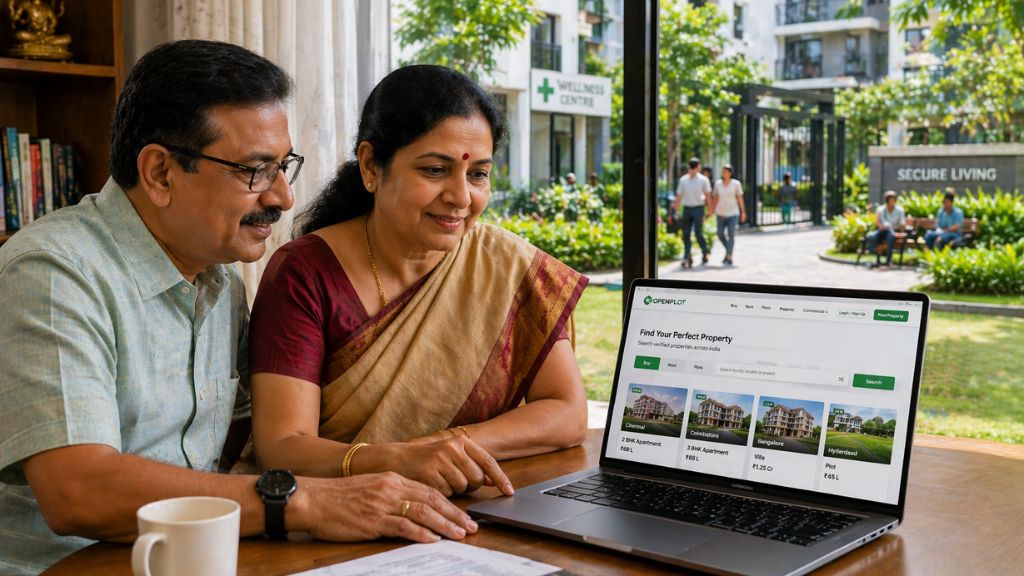
Table of Contents
Understanding Home Ownership After Retirement
Retirement does not end eligibility for home ownership or home loans in India. Most banks and housing finance companies continue to offer loans to senior citizens as long as repayment capacity is established.
In most cases, lenders ensure that the loan is fully repaid by the age of 70 to 75 years. This means retirees aged 60 to 65 can still qualify, especially when supported by pension income, fixed deposits, rental income, or a financially strong co-applicant.
The approval process is less about employment status and more about predictable income flow and financial discipline.
Why Retirees Continue Buying Property
For many retirees, buying a home is a lifestyle transition rather than a financial investment decision. The reasons are often practical and long-term in nature.
The most common motivations include stability of living arrangements, reduced dependence on rent, proximity to healthcare facilities, and the desire to live closer to family. Many also prefer shifting to quieter and more organized residential communities that offer security and convenience.
In several cases, retirees also view home ownership as a way to secure a permanent asset that can be passed on to the next generation while maintaining control over living conditions.
Financial Planning for Retirement Home Buyers
Retirement housing decisions require conservative financial planning.
EMI Affordability Benchmark
- Recommended EMI limit: up to 30 percent of monthly income
- Ensures protection of essential living and medical expenses
Down Payment Strategy
A strong down payment significantly reduces financial stress:
- Ideal range: 40 percent to 50 percent
- Reduces loan burden and interest outflow
- Shortens repayment tenure
Emergency Liquidity Planning
Retirees must prioritize liquidity before committing to property investments.
- Avoid locking entire savings into real estate
- Maintain 2 to 3 years of living expenses in liquid assets
- Ensure medical contingency coverage
Home Loan Options Available After Retirement
Home loans remain accessible after retirement, provided income stability is demonstrated.
Regular home loans are offered based on pension, rental income, and investment returns. These loans usually come with shorter tenures, which naturally leads to higher EMIs but lower long-term interest outflow.
Joint home loans are widely used in retirement planning. When a working spouse or adult child is added as a co-applicant, loan eligibility improves significantly. This structure also distributes repayment responsibility and reduces financial pressure on the retiree.
Another option is a reverse mortgage, which is useful for retirees who already own a home. In this case, the property is used to generate periodic income while the borrower continues living in it. Repayment happens later, typically after the borrower’s lifetime.
Choosing the Right Property After Retirement
Property selection after retirement should be driven by comfort, safety, and accessibility rather than appreciation potential alone.
Senior living communities are becoming increasingly popular because they are designed specifically for elderly residents. These communities offer medical support, emergency response systems, housekeeping services, and social engagement facilities that make daily living easier and safer.
Gated apartment communities are another practical option. They provide security, elevator access, maintenance support, and proximity to essential services, which are important factors for long-term convenience.
Independent villas and residential plots are preferred by retirees who value privacy and long-term flexibility. However, they require higher maintenance responsibility and should be selected only when long-term support systems are available.
Best Cities for Buying a Home After Retirement in India
City selection has a direct impact on the retirement quality of life.
- Pune: Strong healthcare network, stable climate, and senior-friendly residential projects.
- Bengaluru: Advanced healthcare facilities, modern housing infrastructure, and gated communities.
- Kochi: Peaceful environment, lower cost of living, and accessible medical services.
- Hyderabad: Planned urban development and expanding residential options.
- Coimbatore: Affordable housing market with calm lifestyle conditions.
The right city is usually the one that balances healthcare access, cost of living, and lifestyle comfort.
Legal and Property Checks Before Buying
Legal verification is essential in retirement property purchases.
Buyers should ensure that the property has a clear ownership history, valid approvals, and RERA registration. Encumbrance checks are important to confirm that the property is free from legal disputes or financial liabilities.
Developer credibility is equally important. A reliable builder with a strong delivery record reduces long-term risk and ensures better maintenance standards.
Maintenance costs should also be evaluated carefully. Properties with unpredictable or high maintenance expenses can become financially stressful over time.
Key Risks Retirees Should Consider
Retirement property decisions require careful risk awareness, especially because financial flexibility is limited compared to working years.
Liquidity constraints: Real estate cannot be quickly converted into cash. This can create challenges during medical or emergency situations when immediate funds are required.
Overcommitment of savings: Investing too much of retirement capital into property reduces financial flexibility. It can leave insufficient funds for healthcare, travel, or unforeseen needs.
Loan repayment pressure: Shorter loan tenures result in higher EMIs. If not aligned with pension income, this can create long-term financial stress.
Location dependency: A poorly chosen location can affect quality of life significantly. Limited access to hospitals, transport, or daily essentials can become a serious issue over time.
Buy vs Rent After Retirement
The decision between buying and renting depends entirely on financial structure and lifestyle preference.
Buying is suitable when long-term stability is the priority, income is predictable, and EMI obligations are manageable within retirement cash flow.
Renting is more suitable when flexibility is required, liquidity is a concern, or when retirees prefer avoiding maintenance responsibilities and long-term financial commitments.
Why Openplot.com is Useful for Retirement Home Buyers
Openplot.com helps simplify the property search process for retirees by providing access to verified residential listings across India.
The platform allows users to explore apartments, villas, and plots in multiple cities, compare options based on location and budget, and make more informed decisions without fragmented searching across multiple sources.
For retirement home buyers, this structured approach reduces complexity and improves decision clarity.
Conclusion:
Buying a home after retirement in India is not only possible but also practical when approached with financial discipline and clear priorities. The key is to balance comfort with liquidity, stability with flexibility, and ownership with long-term financial security.
A well-chosen retirement home should support health, independence, and peace of mind without creating financial strain. With structured financial planning and reliable platforms like Openplot.com, retirees can make informed decisions that align with both lifestyle needs and long-term security.