
The Encumbrance Certificate (EC) is one of the most critical documents required during property transactions in Andhra Pradesh. Whether you are buying land, selling a flat, applying for a home loan, or validating the legal status of a property, the EC issued through the Integrated Grievance Redressal System Andhra Pradesh (IGRS AP) serves as the primary record of ownership and liabilities.
As property demand rises across Andhra Pradesh, especially in growing markets such as Vizag, Vijayawada, and Tirupati, buyers increasingly rely on the IGRS AP portal to access transparent, verified, and digitized land records. This guide explains how to apply for, track, download, and interpret the Encumbrance Certificate in 2025.
Table of Contents
Understanding IGRS AP (Integrated Grievance Redressal System Andhra Pradesh)
IGRS AP is the official digital platform launched by the Government of Andhra Pradesh to streamline property-related services and ensure transparent land administration. The portal provides public access to property ownership details, registration records, valuations, and encumbrance history.
Key Services Offered by IGRS AP
- Online Encumbrance Certificate (EC) search and download
- Market value and guideline value lookup
- Property registration details
- Stamp duty and registration fee information
- Marriage registration
- Certified copy downloads
- Sub-Registrar Office (SRO) services
Importance of IGRS AP for Property Buyers & Investors
The platform allows users to verify property legality, identify past transactions, detect liabilities or disputes, and ensure that the land or flat being purchased has a clear marketable title.
What is an Encumbrance Certificate (EC)?
An Encumbrance Certificate is a legal document issued by the Sub-Registrar Office (SRO) that displays all registered transactions related to a property. It confirms whether a property carries any monetary or legal liabilities such as loans, mortgages, litigation, court attachments, or prior ownership claims.
Why EC is Essential for Property Transactions
- Ensures the property has a clear, marketable title
- Mandatory for buying or selling property
- Required by banks for home loan approvals
- Needed to withdraw PF for property purchase
- Helps avoid fraud and double registration
What Information Does an EC Contain?
- Nature of transaction (sale, mortgage, release, lease, gift, etc.)
- Document number and registration date
- Details of parties involved
- Survey/plot/flat number
- Property boundaries
- Sub-Registrar Office details
Required Documents for Applying for an Encumbrance Certificate
To apply for an EC in Andhra Pradesh, you must have:
- Property details: District, Mandal, Village, SRO
- Survey number / flat number / plot number
- Applicant’s ID proof
- Sale deed copy (if available)
- Period for which EC is required
- Application fee (varies by duration requested)
Processing Time
EC typically takes 7–15 working days, depending on SRO workload.
How to Apply for an Encumbrance Certificate Online (IGRS AP 2025)
Follow these steps for a seamless online application:
Step-by-Step Process
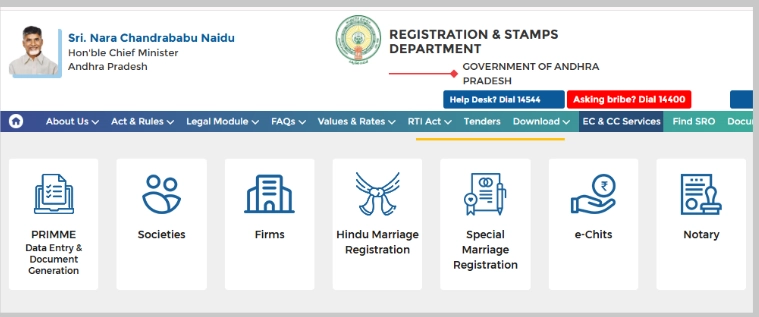
- Visit the official IGRS AP portal: registration.ap.gov.in
- Navigate to “Encumbrance Certificate” under Online Services
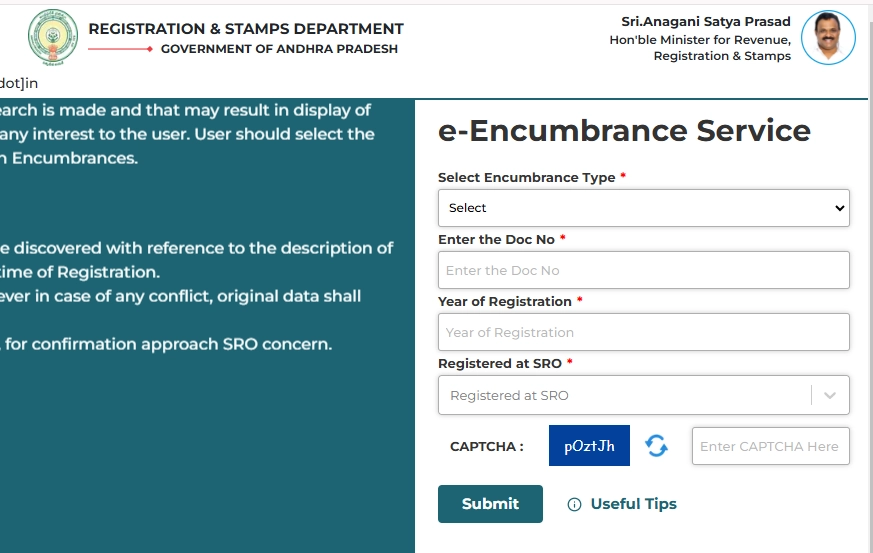
- Select “EC Search / Apply Online”
- Choose search criteria:
- Document No.
- Memo No.
- Plot/Flat/Survey Number
- Enter property details and SRO location
- Upload scanned supporting documents
- Pay the required processing fee
- Submit and note the Application/Reference Number for tracking
Tip: Ensure details such as district, mandal, and village are entered exactly as recorded in land documents to avoid rejection.
How to Check EC Status on IGRS AP
You can track your Encumbrance Certificate status by:
- Logging into the IGRS AP portal
- Clicking “Know Your Application Status”
- Entering the Reference Number
- Viewing status updates (Submitted / Under Processing / Approved / Rejected)
If the status remains pending beyond the expected timeline, applicants should contact the concerned Sub-Registrar’s Office.
How to Download the Encumbrance Certificate (EC) Online
Once the EC is approved:
- Visit the IGRS AP portal
- Select “Download Encumbrance Certificate”
- Enter the Application Number
- Download and print the PDF copy
The downloaded document is digitally valid and accepted for property verification and loan applications.
Offline Method to Obtain Encumbrance Certificate
Applicants may also get an EC by visiting the nearest Sub-Registrar’s Office.
Steps for Offline Application
- Collect identity proof and property documents
- Visit the relevant SRO where the property is registered
- Fill out the EC Request Form
- Provide survey/plot details and the period required
- Submit documents and pay the fee
- Obtain acknowledgment
- Return on the specified date to collect the EC copy
Form 15 vs Form 16 Encumbrance Certificate
IGRS AP issues EC in two formats, depending on whether liabilities are present.
Form 15 – Property with Encumbrances
Issued when:
- The property has mortgages
- Loans or debts are registered
- Transactions exist within the selected period
Form 16 – Nil Encumbrance Certificate
Issued when:
- The property has no recorded liabilities
- No transactions occurred during the chosen period
This is the most preferred certificate during property purchases as it confirms the property is free from claims.
Encumbrance Certificate vs Sale Deed vs Patta
Encumbrance Certificate (EC)
- Shows transaction history and liabilities
- Required for safe purchase
- Issued by Sub-Registrar Office
Sale Deed
- Legal document transferring ownership from seller to buyer
- Must be registered on stamp paper
- Acts as proof of ownership
Patta
- Land ownership document issued by Revenue Department
- Primarily for agricultural land
- Contains details of land type, owner, and cultivation
Both EC and Patta must be checked when buying open plots or farmland.
Common Mistakes to Avoid While Applying for EC
- Providing incorrect survey or flat numbers
- Selecting the wrong SRO
- Requesting the wrong time period
- Uploading unclear scanned documents
- Searching with incorrect spellings of owner names
Conclusion
The Encumbrance Certificate is indispensable for verifying the legal status of any property in Andhra Pradesh. With the IGRS AP portal, buyers and investors can easily apply for, track, and download ECs online, ensuring full transparency before making a purchase decision. Whether you are investing in residential, commercial, or open plots, obtaining a proper EC helps safeguard your investment and prevents legal complications.
| Also read Market Value of AP 2025: A Step-by-Step Guide to Checking IGRS Property Rates If you’re looking to buy or sell property in Andhra Pradesh, knowing the market value is crucial. The Andhra Pradesh Registration & Stamps Department (IGRS AP) provides an online system to check property rates across the state. AP IGRS: Andhra Pradesh Stamps and Registration Deed Details for Land Andhra Pradesh Stamps and Registration Department plays a crucial role in the state’s registration of land properties. It is responsible for maintaining accurate records of property transactions and ensuring transparency and legality in real estate dealings. Meebhoomi AP: How to Search Andhra Pradesh Land Records (Adangal) Online? The Meebhoomi AP portal is a game-changer for property owners, farmers, and citizens of Andhra Pradesh. It brings transparency and accessibility to land records management. Whether you’re looking to verify ownership or access important documents like Adangal and 1B, the portal simplifies these tasks significantly. |
More Information
Stay updated on the latest developments in the real estate industry by following the openplot information.
Our platform offers valuable insights and updates, along with informative articles and market reports. Openplot.com helps find or sell a home, which is a significant milestone.
Frequently Asked Questions
Q. What is the minimum validity of an Encumbrance Certificate?
A. The EC can be issued for any period, but most banks require at least 13-30 years of history.
Q. How can I get an EC for an old property?
A. You can request an EC for an extended period through IGRS AP by providing the exact property details.
Q. Can an EC be used as proof of ownership?
A. No, an EC only shows past transactions, while a Sale Deed is proof of ownership.
Q. What to do if an EC shows incorrect details?
A. You should visit the Sub-Registrar’s Office and apply for corrections.
Q. How long does it take to get an EC?
A. Typically, it takes 7–15 days, but delays may occur due to verification.