
In 2026, global oil prices have moved upward again, largely influenced by ongoing geopolitical conflicts and supply-side disruptions. While oil markets may seem distant from real estate in Telangana, the connection is direct and measurable through cost structures.
India remains heavily dependent on imported crude oil, which means global price increases translate into domestic inflation. This inflation flows into construction materials, transportation, labor, and financing. For a fast-developing region like Telangana, especially Hyderabad, oil price fluctuations have become a critical variable in determining pricing and project viability in real estate in Telangana.
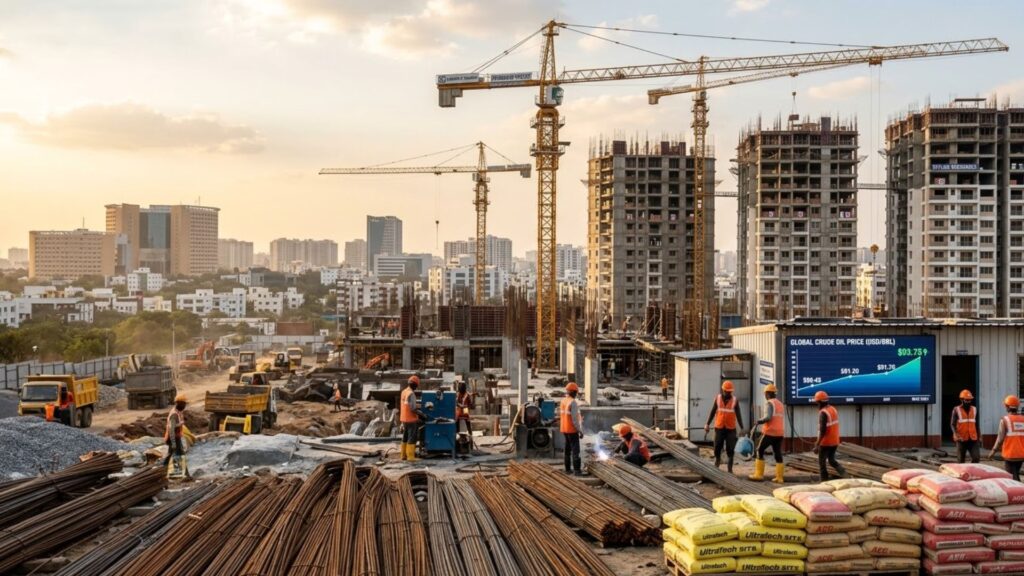
Table of Contents
Why Oil Prices Increased in 2026: Role of Global Conflicts
The rise in oil prices in 2026 is closely linked to geopolitical instability across key oil-producing regions. Conflicts and tensions in energy-exporting zones have disrupted supply chains and created uncertainty in global markets.
The key mechanisms driving price increases include:
- Supply disruptions due to conflict-related production cuts
- Trade route instability, increasing shipping and insurance costs
- Sanctions and export restrictions affecting oil availability
- Market speculation, which amplifies price volatility
These factors reduce supply certainty while maintaining or increasing global demand. As a result, crude oil prices move upward, pushing energy costs higher across industries.
For India, this translates into higher fuel prices, which directly affect the cost of construction and real estate development.
Energy Dependency in Construction Materials
Construction materials are deeply linked to energy costs, making them highly sensitive to oil price movements.
Between 2019 and 2024, India witnessed a sharp rise in construction costs, with overall increases estimated at around 35 to 40 percent. Steel and cement prices were major contributors to this escalation.
In 2026, the renewed rise in oil prices is again putting pressure on:
- Cement production, which depends on fuel-intensive kiln operations
- Steel manufacturing, requiring energy-heavy processes
- Petrochemical products, including pipes, insulation, and fittings
As fuel becomes more expensive, manufacturers pass on these costs to developers. This increases the per square foot construction cost across residential and commercial projects in Telangana.
Transportation and Supply Chain Cost Escalation
Logistics is one of the most immediate channels through which oil prices impact real estate in Telangana.
Higher crude oil prices lead to increased diesel and petrol costs, which directly affect:
- Transportation of raw materials such as sand, cement, and steel
- Movement of heavy machinery and construction equipment
- Inter-city and inter-state supply chains
In 2026, global shipping disruptions linked to geopolitical tensions have further increased freight costs. This has created a dual cost burden where both domestic fuel prices and international logistics expenses are rising.
For Telangana developers, especially those sourcing materials from multiple regions, logistics costs have become a significant component of total project expenditure.
Impact on Project Timelines and Delays
Oil price volatility in 2026 is not just a cost issue. It is also affecting project timelines.
When fuel prices rise sharply:
- Suppliers may slow production due to higher operating costs
- Contractors may face cash flow pressure
- Developers may delay procurement decisions to manage cost risks
In addition, infrastructure projects such as roads and connectivity corridors become more expensive due to higher bitumen and fuel costs. Since infrastructure development is a key driver of real estate growth in Telangana, delays in such projects can temporarily affect market momentum in emerging areas.
Pricing Ripple Effect on Residential Properties
The increase in oil prices eventually reflects in residential property pricing.
Developers rarely absorb cost increases completely. Instead, they pass them on gradually through:
- Incremental price revisions in new launches
- Adjustments in project configurations
- Phased pricing strategies
In this context, Hyderabad’s flat prices have continued to reflect a steady upward trend, influenced by both demand factors and rising construction costs.
For homebuyers in Telangana, the impact includes:
- Higher entry-level pricing for new projects
- Reduced affordability in certain segments
- Increased demand for peripheral or emerging locations
At the same time, alternative formats such as plotted developments are gaining attention. Market trends around plotted developments in India suggest that land-based investments may respond differently to construction cost pressures since they are less dependent on immediate material inputs.
Commercial Real Estate Sensitivity to Energy Costs
Commercial real estate in Telangana is particularly sensitive to energy price fluctuations due to its operational intensity.
In 2026, rising oil prices are impacting:
- Office spaces with higher power and maintenance costs
- Retail centers facing increased operating expenses
- Industrial and logistics facilities with higher transportation costs
Additionally, global economic uncertainty linked to conflicts can slow corporate expansion. This may influence demand for office space in Hyderabad’s IT corridors.
However, the logistics and warehousing sector may see stable or increased demand due to supply chain restructuring, partially offsetting the broader impact.
Investor Behavior During Oil Price Fluctuations
Oil price increases influence real estate investment through macroeconomic channels.
In 2026:
- Rising oil prices are contributing to inflation
- Inflation is influencing interest rate expectations
- Borrowing costs for home loans are becoming a key consideration
As a result, investor behavior is shifting:
- Buyers are taking longer to make decisions
- Demand is moving toward mid-income and affordable housing
- Investors are focusing on long-term value rather than short-term gains
Rental markets often remain relatively stable during such periods. Trends in residential rental prices in India indicate that rental demand can sustain even when purchase decisions slow down due to affordability constraints.
Real Estate in Telangana: Market Resilience Factors
Despite global oil price pressures in 2026, real estate in Telangana shows resilience due to structural strengths.
Strong Employment Ecosystem
Hyderabad continues to attract employment in IT and services, supporting steady housing demand.
Infrastructure Momentum
Ongoing infrastructure projects continue to support long-term property value trends, even if short-term delays occur.
End-User Driven Demand
A large share of demand comes from actual homebuyers, reducing speculative volatility.
Expansion into Peripheral Markets
Growth corridors around Hyderabad provide relatively affordable options, sustaining transaction activity.
These factors help balance the impact of global cost pressures.
Cost Transmission Summary
| Cost Component | Impact of 2026 Oil Price Increase | Effect on Real Estate in Telangana |
|---|---|---|
| Construction Materials | Higher energy and production costs | Increased construction cost per sq ft |
| Logistics | Rising fuel and freight costs | Higher project budgets |
| Labor | Inflation-driven wage pressure | Increased overall development cost |
| Infrastructure | Higher bitumen and fuel costs | Possible delays in connectivity |
| Financing | Inflation-linked rate pressure | Reduced affordability |
| Property Pricing | Gradual cost pass-through | Steady price increase |
Strategic Outlook for Developers and Buyers
For Developers
In 2026, developers in Telangana are focusing on:
- Cost optimization through design efficiency
- Phased project launches to manage pricing
- Strategic sourcing to reduce logistics dependency
- Monitoring global oil trends for procurement planning
For Buyers
Buyers should consider:
- Evaluating long-term location fundamentals
- Entering early in project cycles where feasible
- Assessing total cost, including financing and inflation
For Investors
Investors can approach the market by:
- Tracking oil price movements as a leading indicator
- Identifying early-stage opportunities before price adjustments
- Diversifying across asset types
For those exploring property options, Openplot serves as a platform to access listings and location-level insights across markets.
Conclusion
In 2026, global oil prices have risen due to geopolitical conflicts, creating a ripple effect across industries. In real estate, this impact is most visible through cost channels such as materials, logistics, and financing.
Historical data from 2019 to 2024 already showed how sensitive construction costs are to energy prices. The current cycle reinforces that trend, with renewed pressure on developers and buyers.
In Telangana, while oil price increases influence short-term pricing and project timelines, strong demand fundamentals and urban growth continue to support market stability.
The key takeaway is clear. Real estate in Telangana is no longer shaped only by local dynamics. It is closely linked to global energy movements. Understanding this relationship enables more informed decisions in an increasingly interconnected market.