
When buying a property in India, many buyers focus mainly on price, location, and possession timelines. However, legal approvals connected to the property are equally important. Two of the most important documents in this process are the Occupancy Certificate (OC) and the Completion Certificate (CC).
These certificates are issued by local municipal authorities or competent development authorities, but they serve different purposes under Indian real estate regulations. A property may look complete from the outside, but without the required approvals, buyers can face legal, financial, and ownership-related problems later.
Understanding the difference between an Occupancy Certificate and a Completion Certificate helps buyers make safer property decisions. It also helps avoid complications related to possession, home loans, resale, and municipal approvals.
For buyers searching for residential projects through platforms such as Openplot, checking whether a project has received the required approvals is an important part of property due diligence.
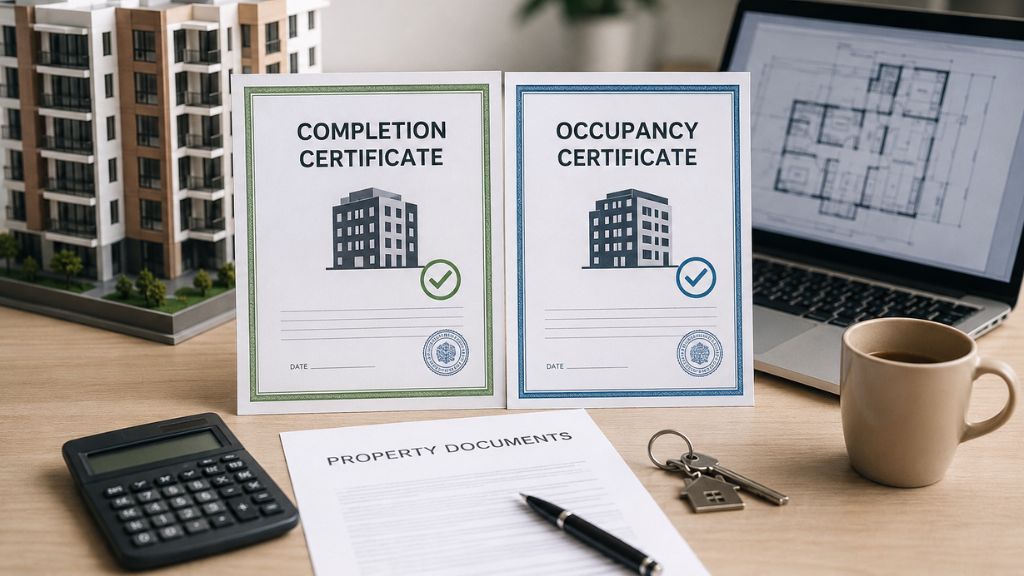
Table of Contents
What is a Completion Certificate in Real Estate?
A Completion Certificate is a legal document issued by the local municipal corporation or development authority after the construction of a building is completed. It confirms that the project has been constructed according to the approved building plan and applicable local building regulations.
The certificate mainly focuses on whether the structure complies with sanctioned plans and technical requirements approved by the authority before construction began.
What Authorities Check Before Issuing a CC
Before issuing the Completion Certificate, the authority generally verifies:
- Whether the building follows the approved layout and sanctioned plan
- Whether structural norms and construction rules are followed
- Whether height limits, setbacks, and floor area regulations comply with local laws
- Whether unauthorized construction or major deviations exist
Once the authority is satisfied that the construction complies with approved standards, the Completion Certificate may be issued to the developer.
Why the Completion Certificate Matters
The Completion Certificate is an important legal document in property transactions because it acts as evidence that the building was constructed lawfully. In many cases, it is required during property registration, legal verification, and documentation processes.
Financial institutions and legal professionals may also review the CC while conducting property-related checks.
However, buyers should understand that a Completion Certificate alone does not automatically mean the building is legally ready for occupation.
What is an Occupancy Certificate?
An Occupancy Certificate is issued after the authority verifies that the building is suitable for occupation and has essential civic infrastructure in place. This certificate confirms that the property is safe for residents to occupy.
Under the Real Estate (Regulation and Development) Act, 2016, the Occupancy Certificate is treated as an approval that permits occupation of a building after the required infrastructure and safety conditions are satisfied.
What is Verified Before Issuing an OC
Authorities generally inspect whether the building has:
- Functional water supply systems
- Sewage and drainage connections
- Electricity connections
- Fire safety compliance, where applicable
- Access to basic civic infrastructure
- Habitability and safety conditions required for occupation
Only after these conditions are verified can the authority issue the Occupancy Certificate.
Why the Occupancy Certificate is Important
The Occupancy Certificate has direct importance for buyers because it relates to lawful possession and use of the property.
In many cities and states, occupying a building without an OC may be treated as unauthorized occupation. This can create difficulties in future transactions and municipal approvals.
The OC is often important for:
- Taking legal possession of the property
- Applying for home loans
- Updating property tax records
- Property mutation processes
- Future resale transactions
For this reason, buyers should not assume that possession is legally complete unless the Occupancy Certificate has been issued.
Understanding the Difference Between OC and CC
Although both certificates are connected to the same project, they are issued for different purposes and at different stages.
The Completion Certificate confirms that the building was constructed according to approved plans. The Occupancy Certificate confirms that the completed building is fit for occupation.
In most cases, the Completion Certificate is required before the Occupancy Certificate can be issued.
Why a Project May Have CC but Not OC
There are situations where a project receives a Completion Certificate but still does not receive an Occupancy Certificate immediately.
This can happen when:
- Water supply systems are incomplete
- Fire safety approvals are pending
- Sewage systems are not fully operational
- Civic infrastructure is incomplete
- Required utility connections are pending approval
In such cases, the building may appear physically complete, but legal occupation may still not be permitted.
This distinction is important for buyers evaluating ready-to-move projects listed on property platforms such as Openplot.
Legal Risks of Buying Property Without OC or CC
Many property disputes in India arise because buyers take possession before all approvals are issued. A missing Occupancy Certificate or Completion Certificate can create legal and financial risks that may affect ownership and resale later.
Common Issues Buyers May Face
Without proper approvals, buyers may face:
- Problems while applying for home loans
- Delays in property registration or mutation
- Difficulty during resale transactions
- Municipal penalties or notices
- Utility connection issues
- Legal disputes related to unauthorized construction
In some cases, authorities may take action if major violations or unauthorized deviations are discovered in the project.
Because of these risks, buyers should independently verify project approvals instead of relying only on marketing materials or verbal assurances.
How RERA Improved Transparency for Homebuyers
The Real Estate Regulatory Authority framework introduced under the RERA Act increased accountability in the Indian real estate sector. Developers are generally expected to disclose project approvals, registration details, and possession timelines more clearly.
State-level RERA authorities also allow buyers to review project information online in many cases.
This has helped buyers become more aware of the importance of checking:
- Occupancy Certificate status
- Completion Certificate availability
- Approved building plans
- Project registration details
- Construction and possession updates
Property platforms such as Openplot can support this process by helping users explore property listings and compare project information before making a purchase decision.
Important Documents Buyers Should Check Before Possession
Before accepting possession of any residential property, buyers should carefully review the legal approvals connected to the project.
Important documents generally include:
- Occupancy Certificate
- Completion Certificate
- Approved building plan
- RERA registration details
- Sale agreement and title documents
- Fire safety approvals where applicable
Buyers should also verify whether approvals apply to the entire project, a specific tower, or a particular phase of development.
Conducting proper legal verification before purchase can help reduce future disputes and ownership complications.
Conclusion
The Occupancy Certificate and Completion Certificate serve different but connected roles in Indian real estate transactions. The Completion Certificate confirms that the construction follows approved plans and building regulations. The Occupancy Certificate confirms that the building is safe and legally fit for occupation.
Both documents are important for lawful ownership, possession, financing, and future resale. Buyers who ignore these approvals may face avoidable legal and financial problems later.
As the Indian real estate sector becomes more regulated under RERA, checking project approvals has become an essential part of responsible property buying. Whether purchasing an apartment, villa, or plotted development, buyers should always verify the legal status of the project before taking possession.
Platforms such as Openplot can help buyers explore property listings while encouraging informed and compliance-focused property decisions.