
The Government of Telangana has introduced the Layout Regularisation Scheme (LRS) to support planned and organised urban growth across the state. This scheme focuses on addressing the issue of unapproved and illegal layouts that have developed over time without following layout rules or master plans. Through LRS, the government aims to improve living conditions, ensure better infrastructure, and guide future development in a more orderly way.
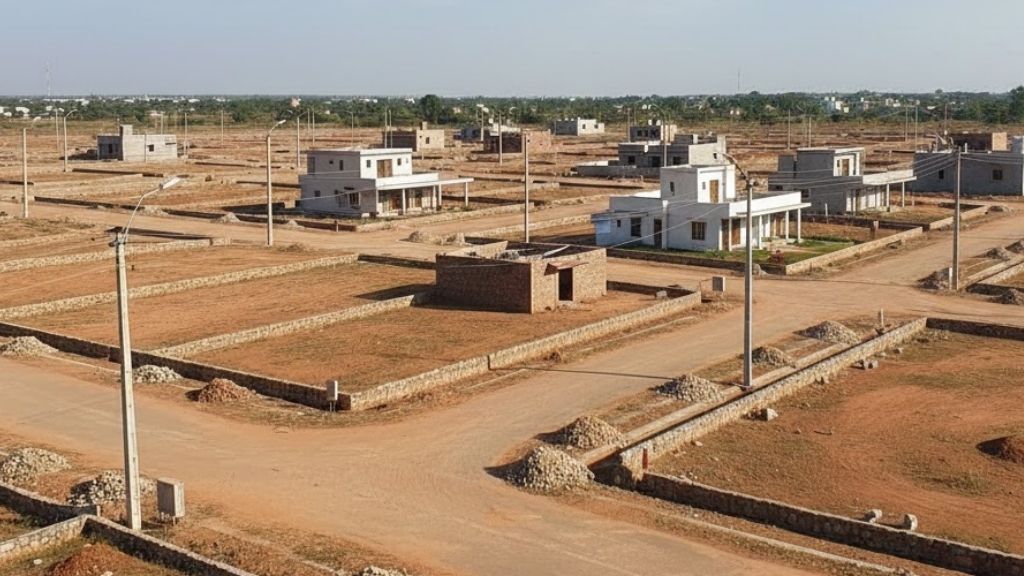
Table of Contents
Why Planned Development Matters in Urban Areas
Planned development is essential for the smooth growth of cities and towns. When layouts are approved, space is properly allocated for roads, drainage, street lights, parks, and other public needs. This helps local bodies provide services without difficulty and ensures residents enjoy a better quality of life.
In contrast, unplanned development often leads to narrow roads, waterlogging, poor lighting, and lack of basic facilities. Over time, these issues become harder to fix. The LRS Scheme was introduced to correct such problems and bring existing layouts into the planning system.
The Problem of Unapproved and Illegal Layouts
The Government of Telangana observed that many layouts were formed without approval from the concerned authorities. These layouts often violate the Statutory Development Plan or Master Plan and do not follow basic layout rules. In many cases, land was divided into plots without proper road access, drainage systems, or open spaces.
Such layouts affect not only the residents living there but also the surrounding areas. Providing services like water supply, sewage, and road connectivity becomes a challenge for local bodies. Unapproved layouts also disturb the overall planning of cities and towns.
What Is the LRS Scheme and How It Helps
The Layout Regularisation Scheme allows owners of plots in unapproved layouts to regularise their land by following a defined process. Once regularised, these plots are officially recognised by the authorities. This helps bring them into the legal system and allows planned extension of services.
Instead of ignoring or removing these layouts, the government chose a practical approach. LRS helps fix past planning issues while setting a clear direction for future development. It supports both the public and the administration in managing urban growth more effectively.
Improving Infrastructure Through Layout Regularisation
One of the key goals of LRS is to improve infrastructure in areas that lack basic facilities. Many unapproved layouts do not have proper roads, street lights, or drainage. This directly impacts daily life and safety.
When a layout is regularised, it becomes easier for local bodies to plan and provide these services. Over time, residents can expect better roads, improved drainage, and basic civic amenities. This gradual improvement helps create more liveable neighbourhoods.
Benefits of the LRS Scheme for Plot Owners
For plot owners, LRS offers several important benefits. A regularised plot has legal recognition, which gives confidence and peace of mind. It becomes easier to sell the plot, transfer ownership, or apply for loans.
Regularisation also helps during construction. With proper permissions, owners can build homes without fear of legal issues. In the long run, regularised plots tend to hold better value compared to unapproved ones.
How LRS Supports Local Bodies and Urban Planning
Local bodies benefit greatly from the LRS Scheme. Once layouts are part of official records, planning becomes more effective. Authorities can map areas properly and plan utilities like water supply, drainage, and roads.
Regularisation also helps improve transparency and accountability. Property records become clearer, which supports better governance and future development planning.
Importance of Checking LRS Status Before Buying a Plot
For buyers and investors, checking whether a plot is approved or regularised under LRS is very important. Purchasing land without proper status can lead to legal and financial trouble later.
Property listing platforms like Openplot help users explore available plots with better information. By reviewing details carefully, buyers can make informed decisions and choose properties that are safer for long-term use or investment.
LRS Scheme and the Future of Urban Growth in Telangana
The LRS Scheme is not meant to promote illegal layouts. Instead, it aims to correct existing issues and prevent further unplanned growth. At the same time, the government is enforcing stricter rules for new layouts to ensure approvals are taken before development begins.
This balanced approach supports sustainable urban growth. It helps cities expand in a more organised way while protecting public interest and improving living standards.
Conclusion:
The Layout Regularisation Scheme is a meaningful initiative by the Government of Telangana to bring order to urban development. By addressing the issue of unapproved layouts, the scheme supports planned growth, better infrastructure, and improved quality of life.
For plot owners, buyers, and investors, LRS offers clarity and security. As Telangana continues to develop, schemes like LRS play a vital role in shaping safer, well-planned, and more comfortable urban spaces.