
Indian property stocks have started 2026 under pressure. After multiple years of strong growth, the real estate sector is now facing a broad correction. As of January 2026, the Nifty Realty index has dropped between 8% and 12% year to date, making it one of the weakest-performing sector indices this January. All listed real estate stocks are trading lower, reflecting a clear shift in investor mood.
This decline is not caused by one isolated event. Instead, it is the result of slower home demand, weak quarterly earnings, construction delays, rising costs, and wider market stress. Together, these factors have weighed heavily on real estate stocks across India.
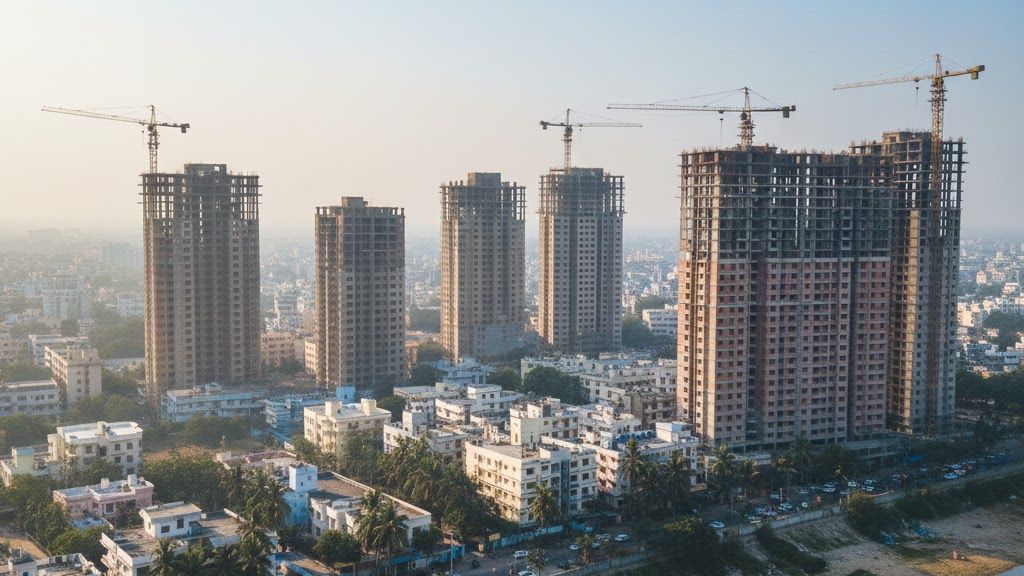
Table of Contents
Weak Home Demand Impacts Indian Property Stocks
One of the main reasons behind the fall in property stocks is the slowing demand in the housing market. Over the last few years, residential property prices increased rapidly, especially in metro cities. While this helped developers improve revenue earlier, it has now affected affordability.
Many homebuyers are delaying purchases due to higher prices and rising loan costs. This has resulted in slower booking volumes and softer sales numbers across major cities. Even though housing demand remains present, buyers are becoming more cautious and selective.
Data from recent quarters shows that overall home sales have declined from their earlier peak levels, despite new projects being launched. Premium housing markets, in particular, are seeing slower movement as buyers reassess budgets.
Q3 FY26 Results Reflect Realty Sector Slowdown
Recent quarterly earnings have added to investor concerns. Q3 FY26 results from the real estate sector were largely below expectations. Revenue growth slowed, and profits came under pressure due to higher expenses and weaker sales momentum.
While some developers reported stable project pipelines, actual sales growth remained limited. The gap between supply and absorption became more visible, leading investors to question near-term earnings visibility for the sector as a whole.
This earnings slowdown has played a key role in pulling down property stock prices, as markets react quickly to changes in financial performance.
Construction Delays Create Cash Flow Pressure
Construction delays remain a structural issue for the Indian real estate sector. On average, developers are completing less built-up area annually compared to the volume of new supply added over recent years. This imbalance has led to slower project execution.
When projects take longer to complete, revenue recognition is delayed. Most real estate companies record income based on construction milestones. Delays therefore push cash inflows further out, increasing financial strain.
Lower completion rates also raise concerns among buyers and investors. In recent years, average completion levels have declined compared to earlier cycles, highlighting execution challenges across the sector.
Rising Input Costs Reduce Profit Margins
Higher construction costs are another key reason behind the fall in real estate stocks. Prices of cement, steel, and other building materials remain elevated. Labour costs have also increased due to shortages and wage pressure.
At the same time, developers are finding it difficult to raise property prices further without affecting demand. This has resulted in shrinking operating margins for many real estate companies.
Interest expenses have also increased. Unsold inventory and unfinished projects require funding, which adds to borrowing costs. As a result, profitability has come under pressure across the sector.
High Property Prices Affect Housing Affordability
Property prices rose sharply after the pandemic, supported by strong demand and low interest rates. However, this rapid rise has now started to impact affordability.
Many buyers, especially first-time homebuyers, are finding it difficult to match higher property prices with current income levels. This affordability gap has reduced buying urgency, particularly in large cities.
As a result, developers are seeing slower conversion from enquiries to actual sales, which affects overall market activity.
Investor Sentiment Turns Cautious on Realty Stocks
Investor sentiment toward real estate stocks has changed significantly in early 2026. After strong gains in 2023 and 2024, many investors booked profits as growth began to slow.
Valuations in the real estate sector had moved to higher levels during the rally years. Once earnings momentum weakened, these valuations came under scrutiny, leading to increased selling pressure.
Foreign institutional investors have also reduced exposure to real estate stocks amid global uncertainty. In periods of market stress, investors often shift funds toward safer sectors, which further affects cyclical industries like real estate.
Broader Market Weakness Adds to Pressure
The decline in property stocks is also linked to broader market conditions. Indian equity indices have faced selling pressure in early 2026 due to global factors, geopolitical tensions, and foreign fund outflows.
When the overall market turns weak, sectors that depend on confidence and long-term spending tend to fall more sharply. Real estate, being closely linked to economic stability and consumer sentiment, is no exception.
This wider market environment has added to the downside in real estate stocks.
Technical Trends Show Continued Selling Pressure
From a market trend perspective, the real estate index has seen consecutive sessions of decline. Many stocks are trading well below their recent highs, reflecting sustained selling interest.
Such technical weakness often reinforces negative sentiment, as traders and short-term investors reduce exposure. This has contributed to the sharp year-to-date fall seen in the sector.
What This Means for Homebuyers and Property Platforms
For homebuyers, the current slowdown may bring better negotiation opportunities. Developers may offer flexible payment plans, incentives, or price adjustments to support sales. However, buyers should focus on project quality, legal clarity, and delivery track records.
For property listing platforms like Openplot, this phase highlights the importance of verified listings, transparent pricing, and accurate project information. Buyers and sellers rely more on trusted platforms during uncertain market conditions.
Conclusion:
The fall in Indian property stocks in early 2026 reflects a period of adjustment after years of strong growth. Slower demand, execution challenges, rising costs, and cautious investor sentiment have all played a role.
While long-term housing needs in India remain strong, the current phase demands discipline from developers and careful decision-making from buyers and investors. As the market stabilizes, clarity on pricing, delivery, and financial strength will become increasingly important.
For platforms like Openplot, this environment reinforces the value of informed property decisions backed by reliable data and market insight.