
GST continues to be an important part of the construction and real estate sector in 2026. Whether someone is buying a flat, developing a housing project, or handling a construction contract, GST can affect pricing, billing, project cost, and overall compliance.
Many people still find GST on construction confusing because rates differ based on the type of property, stage of construction, and nature of the contract. A flat under construction is treated differently from a ready-to-move property. Affordable housing has a different rate from standard residential projects. Government contracts may also fall under separate categories.
This guide explains how GST on construction works in 2026 in a practical and easy-to-understand format.
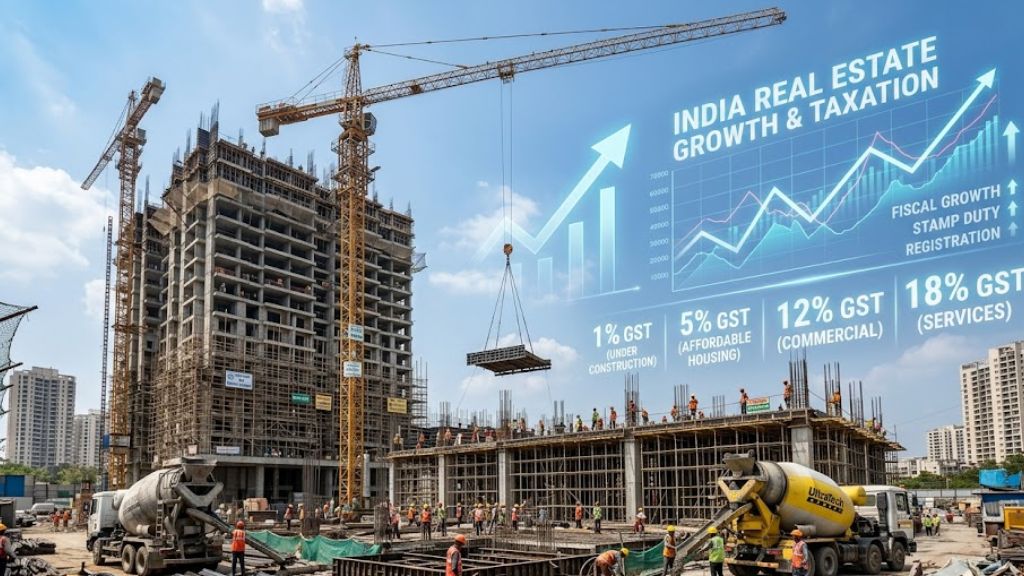
Table of Contents
What Does GST Apply to in Construction?
GST is charged on specific construction-related supplies and services. It does not apply in the same way to every property transaction, which is why proper understanding is important.
In the construction sector, GST commonly applies to:
- Construction services such as building, finishing, fabrication, and civil work
- Works contracts where labor and materials are supplied together
- Sale of under-construction flats or units
- Building materials such as cement, granite, tiles, and steel
The actual GST rate depends on the type of supply and project category.
GST Rates on Construction in 2026
Construction does not have one single GST rate. Different activities attract different slabs.
General Construction Services
Standard residential and commercial construction services generally attract 18% GST where no concessional rate is available. This may include finishing contracts, interior work, structural services, and similar activities.
Works Contract Services
Where a contractor provides both materials and labor under a composite agreement, 12% GST may apply in eligible cases.
Residential Housing Projects
Residential projects may fall under lower rates:
- 1% GST for eligible affordable housing projects
- 5% GST for eligible non-affordable residential housing projects
Government and Infrastructure Projects
Certain original government works, such as roads, bridges, airports, tunnels, and public buildings may attract 12% GST. Repair and maintenance contracts generally attract 18% GST.
Because classification matters, businesses should review each project before billing.
GST on Under-Construction Flats
If a buyer purchases a flat before the completion certificate is issued, GST generally applies. In such cases, the transaction is treated as a supply of service under GST law.
This usually means GST is charged on the agreement value based on the applicable rate.
For many buyers, this becomes an important part of the total purchase cost. It is advisable to ask the developer for a clear cost breakdown before making payment.
Read More: Is It Safe to Buy Under-Construction Property in India 2026?
GST on Ready-to-Move or Completed Flats
If the flat has already received a completion certificate from the competent authority, GST is generally not charged on the sale.
However, buyers may still need to pay:
- Stamp duty
- Registration charges
This is why ready-to-move properties are often preferred by buyers who want to avoid GST on purchase value.
Affordable Housing Benefit in 2026
Affordable housing continues to receive concessional GST treatment in 2026. Eligible projects may attract 1% GST, which helps reduce the tax burden on homebuyers.
However, not every low-cost flat automatically qualifies as affordable housing. Eligibility depends on applicable conditions such as carpet area, project classification, and notified rules.
Developers should apply the correct rate carefully. Buyers should verify the GST rate mentioned in booking documents and sale agreements.
Read More: Best Affordable Housing Schemes in India
GST on Construction Materials
GST on construction is not limited to services. Building materials used in a project also carry separate GST rates.
Materials such as cement, granite, tiles, steel products, and sanitary fittings form a large part of the construction cost. Any reduction or change in GST on these items can directly affect project budgets.
Lower material tax rates may help developers manage costs better and may also support more competitive pricing in the market.
Input Tax Credit (ITC) for Builders and Contractors
Input Tax Credit allows eligible businesses to claim credit for GST paid on purchases used for taxable business activity.
This may include tax paid on materials, vendor services, subcontractor bills, and professional expenses connected with the project.
Why ITC Matters
ITC can reduce the overall tax cost of a project and improve working capital management.
Important Note
ITC in construction is subject to legal conditions and restrictions. In some cases, credits may be blocked, especially when property is constructed for own use or documentation is incomplete.
Proper accounting and invoice management are essential.
Read More: What is GST on Real Estate, and How is It Calculated?
GST on Government Construction Contracts
Businesses working on public infrastructure projects should review GST treatment carefully.
Original works such as roads, bridges, water systems, airports, and government buildings may qualify for concessional rates. But maintenance, renovation, and repair work may fall under a higher rate.
For contractors, clear contract drafting and proper invoice segregation can prevent future tax disputes.
Practical Tips in 2026
- For Homebuyers: Check whether the property is under construction or completed before booking. This helps you understand whether GST is payable.
- For Builders: Use the correct project classification, maintain GST records properly, and review ITC eligibility regularly.
- For Contractors: Understand whether the work is original construction, works contract, or maintenance before applying GST.
Conclusion:
GST on construction in 2026 remains an important factor in property pricing and project planning. While lower rates are available for affordable housing and certain infrastructure work, the correct tax treatment depends on the facts of each project.
For buyers, understanding GST can help avoid unexpected charges. For builders and contractors, proper classification and compliance can reduce risk and improve margins.
Since construction transactions involve significant value, taking professional advice before purchase, project launch, or invoicing is always a sensible step.