
When searching for plots, houses, or flats online, buyers often come across terms like DTCP approved property and RERA approved property. Many people believe both mean the same thing, but they are not. Understanding the difference between DTCP approval and RERA approval is important before making any property decision.
For buyers using a trusted property listing platform like Openplot, knowing these approvals helps avoid legal issues and ensures a safer purchase. This article explains DTCP approved vs RERA approved properties in a clear and simple way.
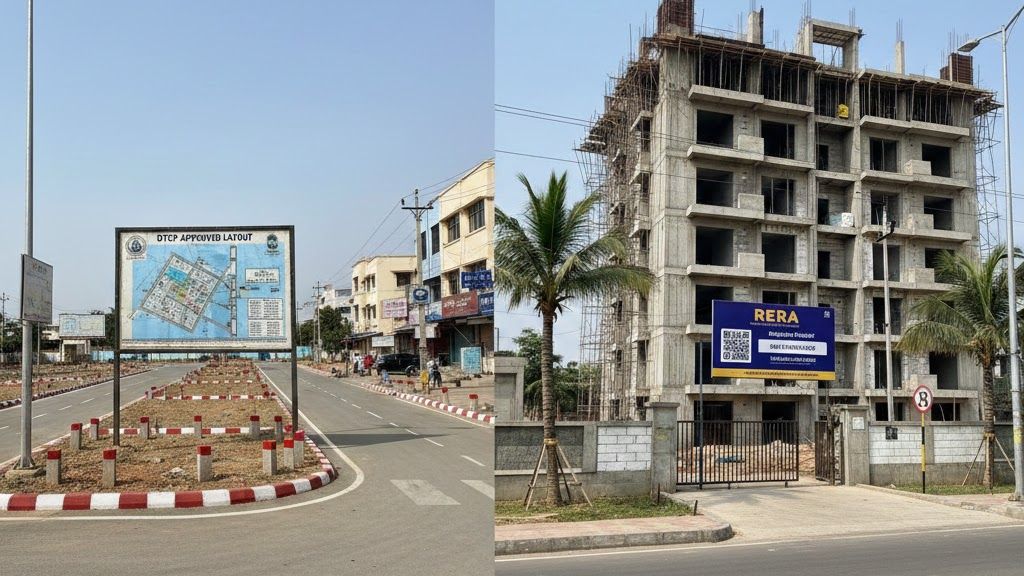
Table of Contents
What Is DTCP Approved Property?
A DTCP approved property is one that has approval from the Directorate of Town and Country Planning. This is a state government department that controls land use and layout planning, especially in areas outside major city limits.
DTCP approval mainly applies to:
- Residential plots
- Plot layouts
- Townships
- Individual houses in developing areas
DTCP checks whether the land layout follows government rules. It reviews road access, plot sizes, open spaces, and zoning permissions. When a plot is DTCP approved, it means the land can legally be used for residential purposes.
What Is RERA Approved Property?
A RERA approved property is registered under the Real Estate Regulatory Authority. RERA operates under a central law that applies across India, with each state having its own RERA portal.
RERA approval is mandatory for:
- Apartment projects
- Villa projects
- Housing projects larger than 500 square meters
- Projects with more than 8 units
RERA focuses on the full project, not just the land. It tracks how the project is sold, built, and delivered to buyers.
DTCP Approval Authority vs RERA Approval Authority
The difference between DTCP and RERA starts with who controls them. DTCP approval comes from a state planning department. Its role is limited to land use and layout planning.
RERA approval comes from a state authority under a national law. It monitors developers, project timelines, and buyer payments.
In simple terms:
- DTCP controls where and how land can be developed
- RERA controls how projects are managed and delivered to buyers
Scope of DTCP Approved Layouts and RERA Approved Projects
DTCP approval covers:
- Plot boundaries
- Internal roads
- Drainage planning
- Open areas
- Land zoning
It mainly applies to plots and layouts outside city limits.
RERA approval covers:
- Project launch details
- Construction progress
- Completion dates
- Use of buyer money
- Developer background
RERA applies to entire real estate projects, not just layouts.
Buyer Protection in DTCP Approved vs RERA Approved Properties
A DTCP approved plot offers basic legal safety. It confirms that the layout is approved and not illegal. However, DTCP does not control project delays or money usage.
A RERA approved property offers strong buyer protection, including:
- 70% of buyer funds kept in a separate bank account
- Clear possession timelines
- Refunds or compensation for delays
- Complaint resolution within 60 days
During 2025 and 2026, RERA authorities are strictly enforcing these rules, making RERA approval very important for buyers.
Transparency Difference Between DTCP and RERA Approval
DTCP approval usually provides:
- A layout approval certificate
- Limited public details
- No regular updates
RERA approval requires:
- Online project registration
- Regular progress updates
- Public access to approvals and timelines
- Developer details on state RERA portals
In 2026, RERA portals are more connected and easier to use, allowing buyers to check project details anytime.
How to Verify DTCP Approved Property Online
Before buying a plot, buyers should verify DTCP approval.
Steps to verify DTCP approval:
- Visit the official DTCP state website (for example, dtcp.telangana.gov.in)
- Enter the DTCP approval number
- Check the layout plan and approval status
This helps confirm that the plot is legally approved.
How to Verify RERA Approved Property Online
For apartments and villas, RERA verification is essential.
Steps to verify RERA approval:
- Visit the official state RERA website (for example, rera.telangana.gov.in)
- Search using the RERA registration number
- Review project details, timelines, and developer information
A valid RERA number confirms that the project is registered and monitored.
DTCP Approved vs RERA Approved Property: Key Differences
| Aspect | DTCP Approved Property | RERA Approved Property |
|---|---|---|
| Main Purpose | Layout and land planning | Project delivery and buyer safety |
| Applies To | Plots and layouts | Apartments and large projects |
| Buyer Protection | Medium | High |
| Public Information | Limited | Detailed and updated |
| Legal Control | Land use | Construction and funds |
| 2026 Status | No major change | Stricter enforcement |
Which Is Better: DTCP Approved or RERA Approved?
The answer depends on the type of property.
- For plots, DTCP approval is necessary
- For apartments and villas, RERA approval is mandatory
- For large developments, both approvals are important
A property that follows DTCP rules and is registered under RERA offers better legal safety.
Conclusion:
DTCP approved and RERA approved properties serve different purposes. DTCP ensures legal land planning, while RERA protects buyers throughout the project period. Knowing the difference helps buyers avoid future problems and choose safer properties.
Before finalizing any deal, always verify approvals on official portals and prefer listings on reliable platforms like Openplot.