
Delhi-NCR real estate has long been one of India’s most expensive and active property markets. For years, buyers focused mainly on location, connectivity, job access, and infrastructure. Today, one more factor has moved to the center of every property discussion: air quality.
As of January 4, 2026, Delhi recorded an AQI of around 262, which falls in the poor category. For residents, this is not an unusual number. Every year, air quality remains poor or worse for nearly four to five months, especially between October and February. This persistent problem is now influencing how people think about buying, renting, and investing in property.
At the same time, property prices remain high. In many parts of Delhi and Gurugram, residential prices hover around ₹18,000 to ₹20,000 per square foot, raising an important question for buyers: is the cost justified when daily living conditions are getting harder?
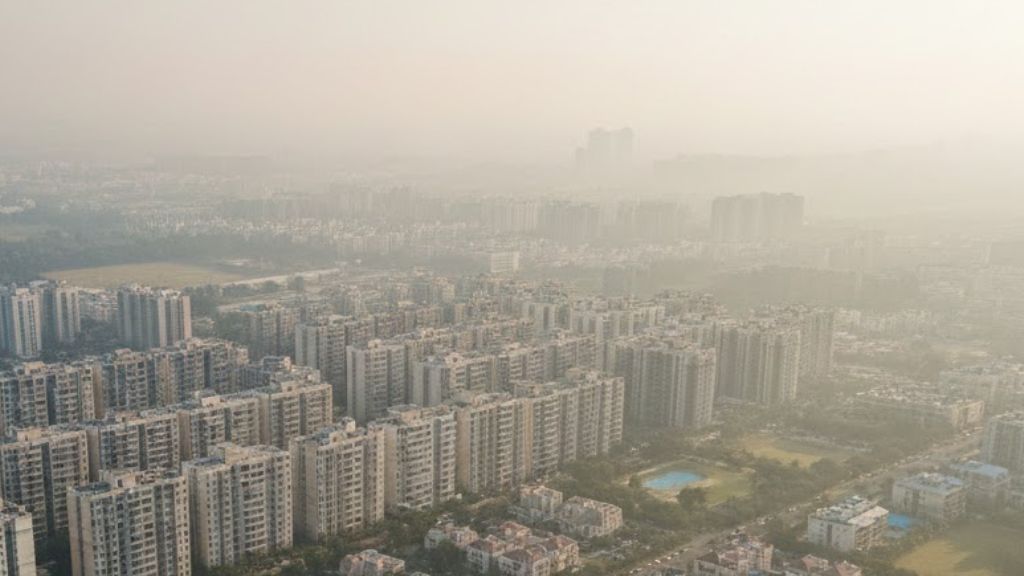
Table of Contents
Air Pollution and AQI: How Serious Is It for Daily Life?
Air pollution in Delhi-NCR is no longer limited to news reports or government warnings. It has become a daily health issue. On several winter days, AQI crosses 300, entering the very poor range. In some central Delhi locations, AQI levels of 350 to 450 are regularly recorded.
Medical data shows a steady rise in asthma cases, breathing difficulties, eye irritation, and heart-related problems. Children and elderly residents are the most affected, but even healthy adults report fatigue and discomfort during high pollution days.
Daily routines change. Morning walks stop. Children stay indoors. Balconies remain shut. Air purifiers, masks, and closed windows have become normal household items. This shift in lifestyle has directly impacted how people judge the quality of a home.
How Air Pollution Is Impacting Delhi-NCR Real Estate Today
Air pollution has started affecting real estate demand at a local level. Buyers are no longer viewing Delhi-NCR as one uniform market. Instead, they are comparing air quality across micro-markets.
Areas such as Greater Noida and parts of Noida Extension, which generally record slightly better AQI levels, are seeing relatively stronger interest. On the other hand, heavily polluted zones in central Delhi are facing hesitation, especially from families planning long-term stays.
Construction activity is another area under pressure. Due to the Graded Response Action Plan (GRAP), construction is frequently halted during severe pollution phases. Although recent restrictions were eased from Stage IV to Stages I and II, repeated bans delay project completion. Delays increase costs for developers and create uncertainty for buyers waiting for possession.
These disruptions have reduced confidence in under-construction projects, pushing many buyers toward ready-to-move homes.
Delhi-NCR Residential Real Estate Prices vs Liveability Concerns
Despite environmental challenges, prices have not dropped significantly. Infrastructure projects such as Dwarka Expressway, metro expansions, and road upgrades continue to support property values. Luxury housing, in particular, has seen strong price growth over the past two years.
However, buyer behaviour has clearly changed. Properties are taking longer to sell. Negotiations are tougher. Only projects with good ventilation, green buffers, and strong location advantages are maintaining demand.
Homes without these features are losing appeal, especially in polluted pockets. Buyers are no longer impressed by size alone. Liveability now matters as much as price.
AQI Becomes a New Filter for Homebuyers
Earlier, buyers asked about parking, water supply, and power backup. Today, AQI is one of the first questions. Many buyers openly question whether paying ₹2–3 crore for a home in a high-pollution area makes sense for their family’s health.
End-users prefer homes with enclosed amenities, limited outdoor exposure, and better airflow design. Parents are especially cautious, considering long-term health impacts on children.
NRIs and high-income buyers are also changing their approach. Instead of concentrating investments only in Delhi-NCR, many are diversifying into cities with cleaner air. Rental yields in NCR remain around 3–4%, which feels less attractive when pollution risks are factored in.
Impact of Air Pollution on Rentals and Tenant Movement
Rental demand is also being reshaped by air quality. Areas with consistently high AQI are seeing higher tenant turnover. Expats and corporate professionals prefer shorter leases or flexible rental options.
Gurugram, which once attracted a large expat population, is now seeing more cautious rental behaviour. Poor air quality reduces the appeal of outdoor facilities and affects overall comfort, leading tenants to relocate more frequently.
This trend affects investors who rely on steady rental income. Properties in polluted zones often experience longer vacancy periods.
Future Outlook for Delhi-NCR Real Estate Amid Air Pollution
Looking ahead to 2026 and beyond, Delhi-NCR real estate is expected to grow selectively. Price appreciation of around 6–10% may occur in well-connected corridors backed by strong infrastructure and better planning.
However, broad-based growth across all locations appears unlikely unless air quality improves in a meaningful and lasting way. Air pollution is no longer a short-term issue; it is a structural risk that affects buyer confidence.
If AQI levels remain consistently high, demand may gradually shift toward cities that offer cleaner air and similar employment opportunities. Buyers will still consider Delhi-NCR, but decisions will be slower and more cautious.
Long-Term Impact of Air Pollution on Property Value
Over time, air pollution can affect property value in subtle but important ways. Areas known for poor air quality may see slower appreciation, longer resale cycles, and reduced rental demand.
On the other hand, locations with better environmental conditions, green planning, and stable AQI may emerge as safer long-term choices. This difference will likely widen in the coming years.
Conclusion:
Air pollution has moved beyond being an environmental concern. It is now a critical factor in real estate decision-making. AQI affects health, lifestyle, rental demand, and long-term value.
For buyers, understanding local air quality is just as important as checking price trends. For investors, risk assessment must include environmental factors, not just returns.
Delhi-NCR real estate will continue to evolve, but its future growth will depend not only on infrastructure and development, but also on whether living conditions improve enough to restore buyer confidence.